
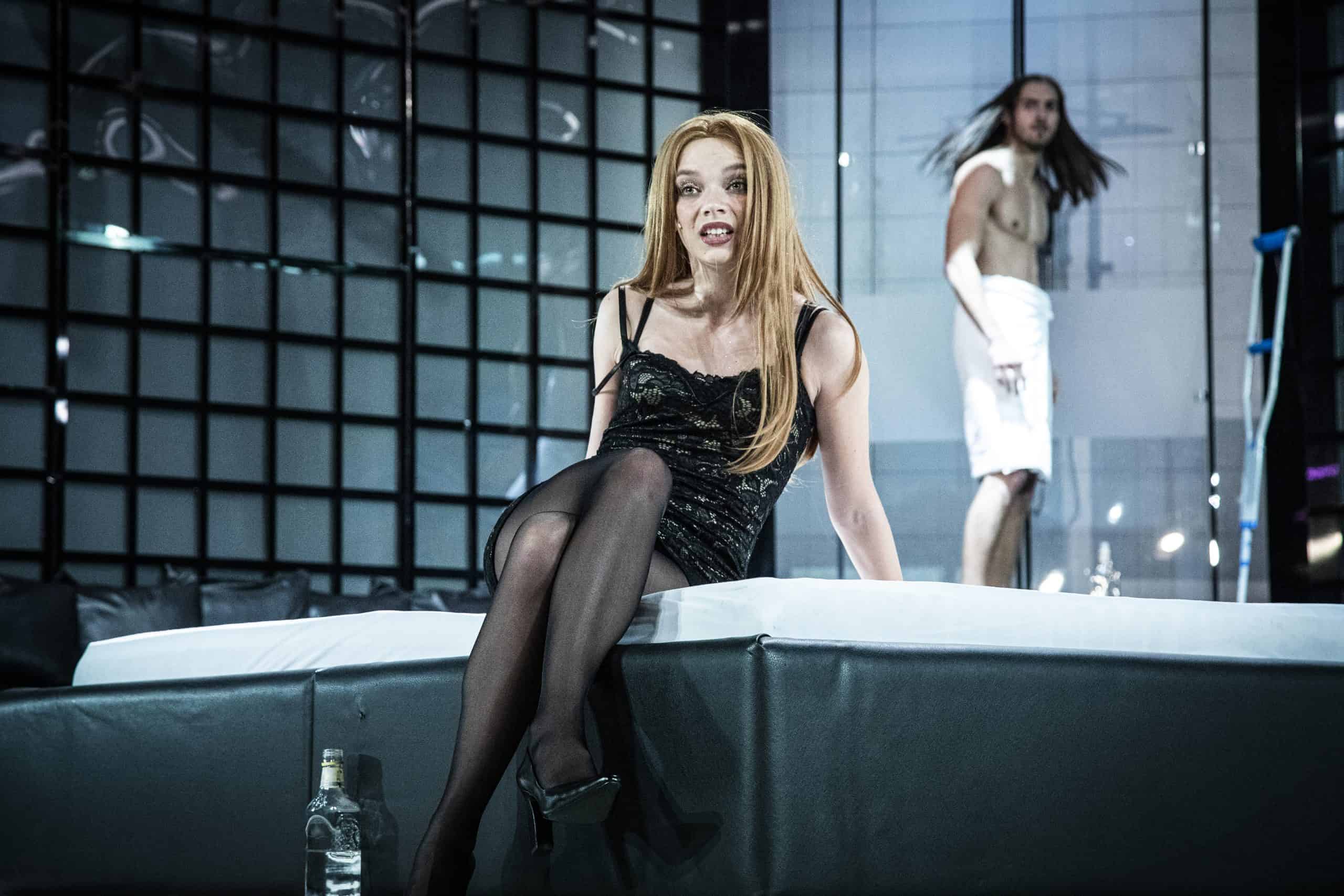
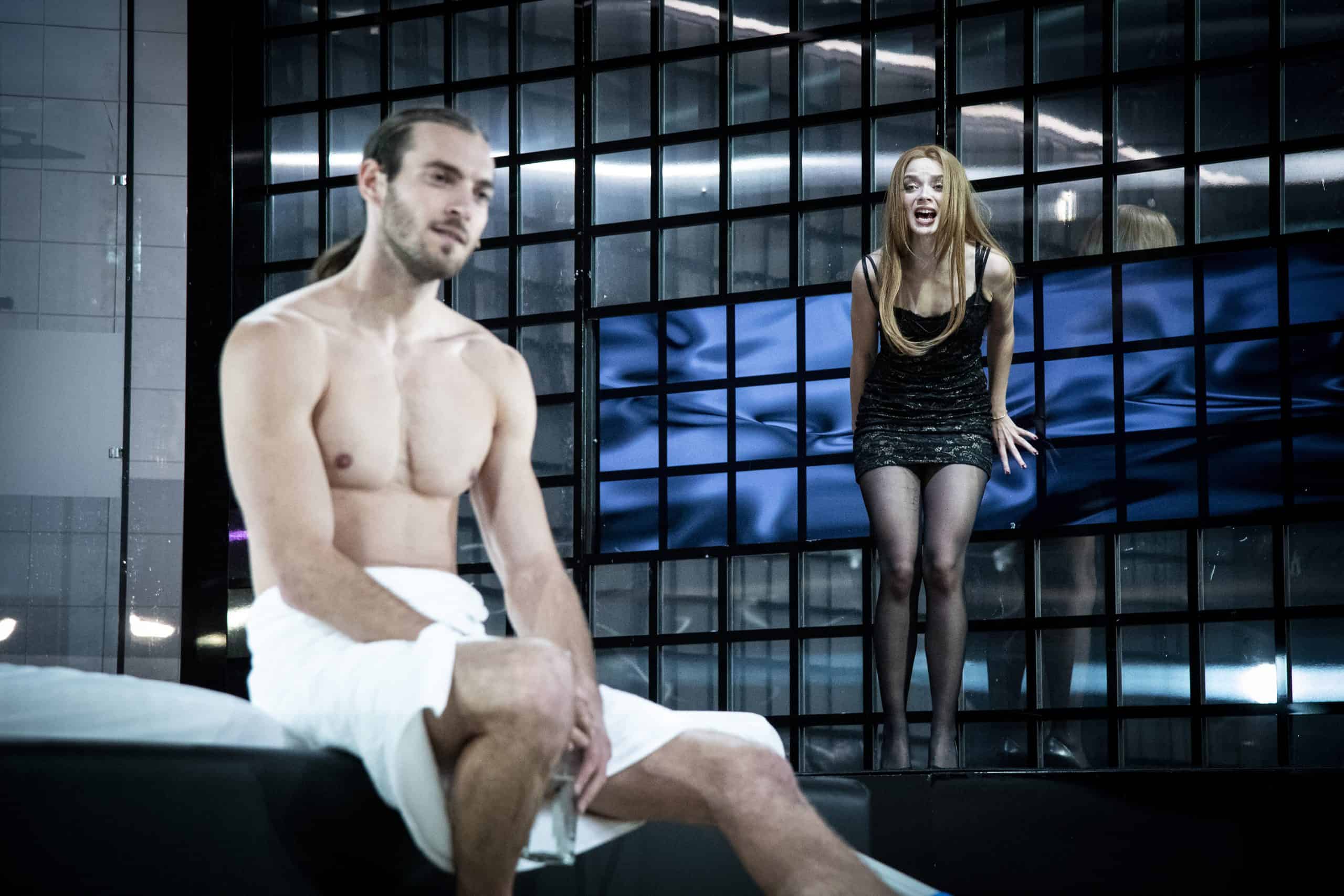
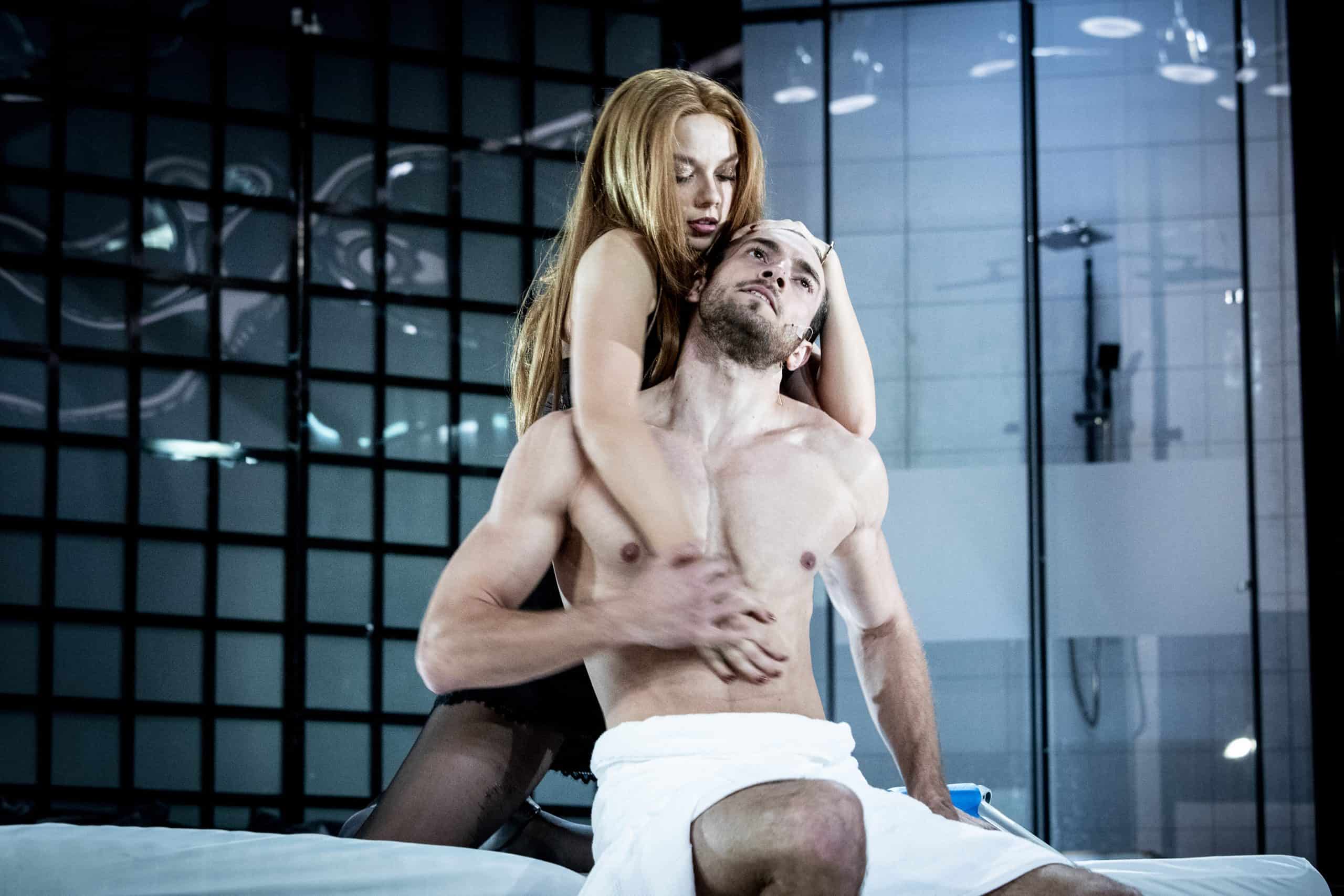
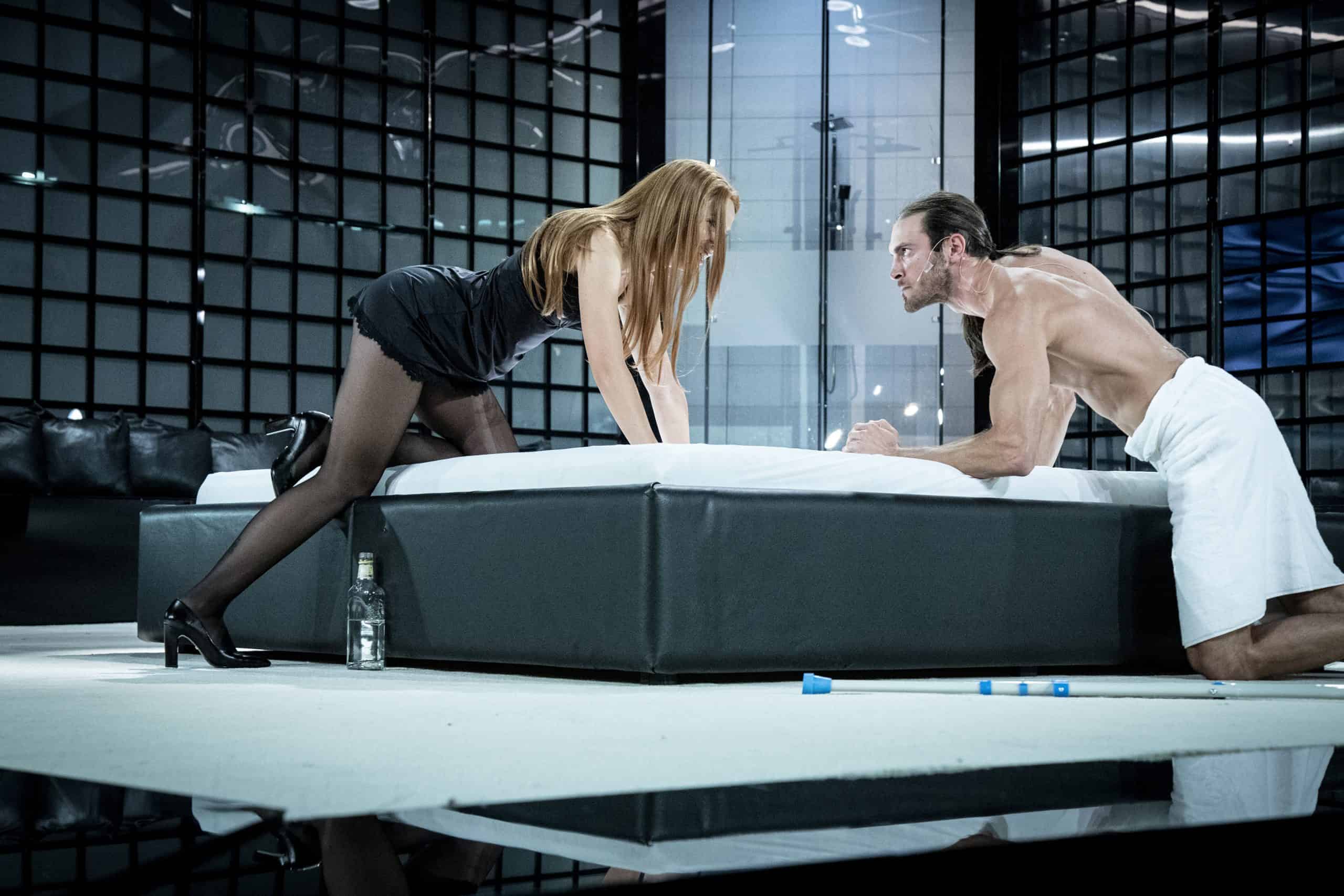
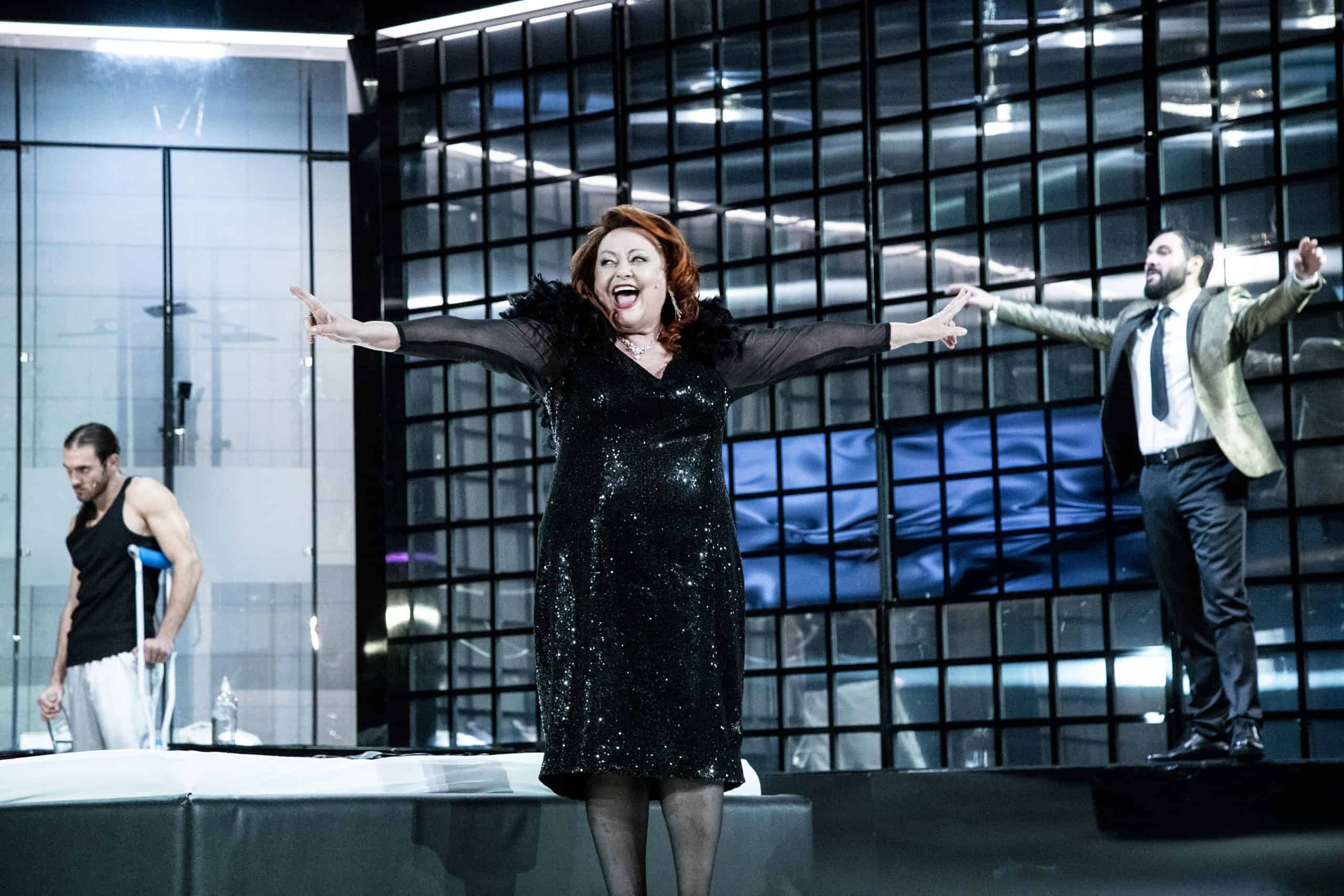
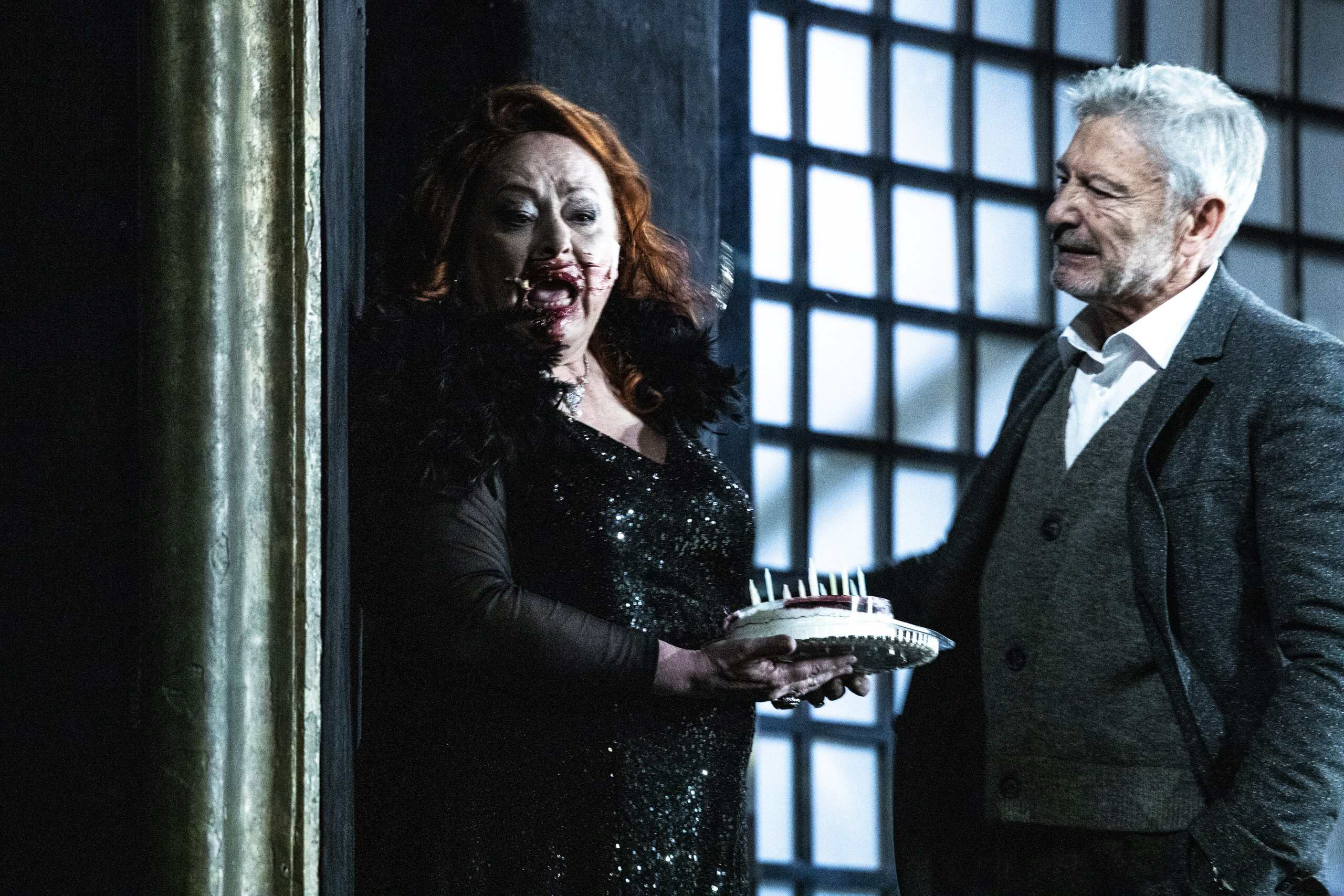
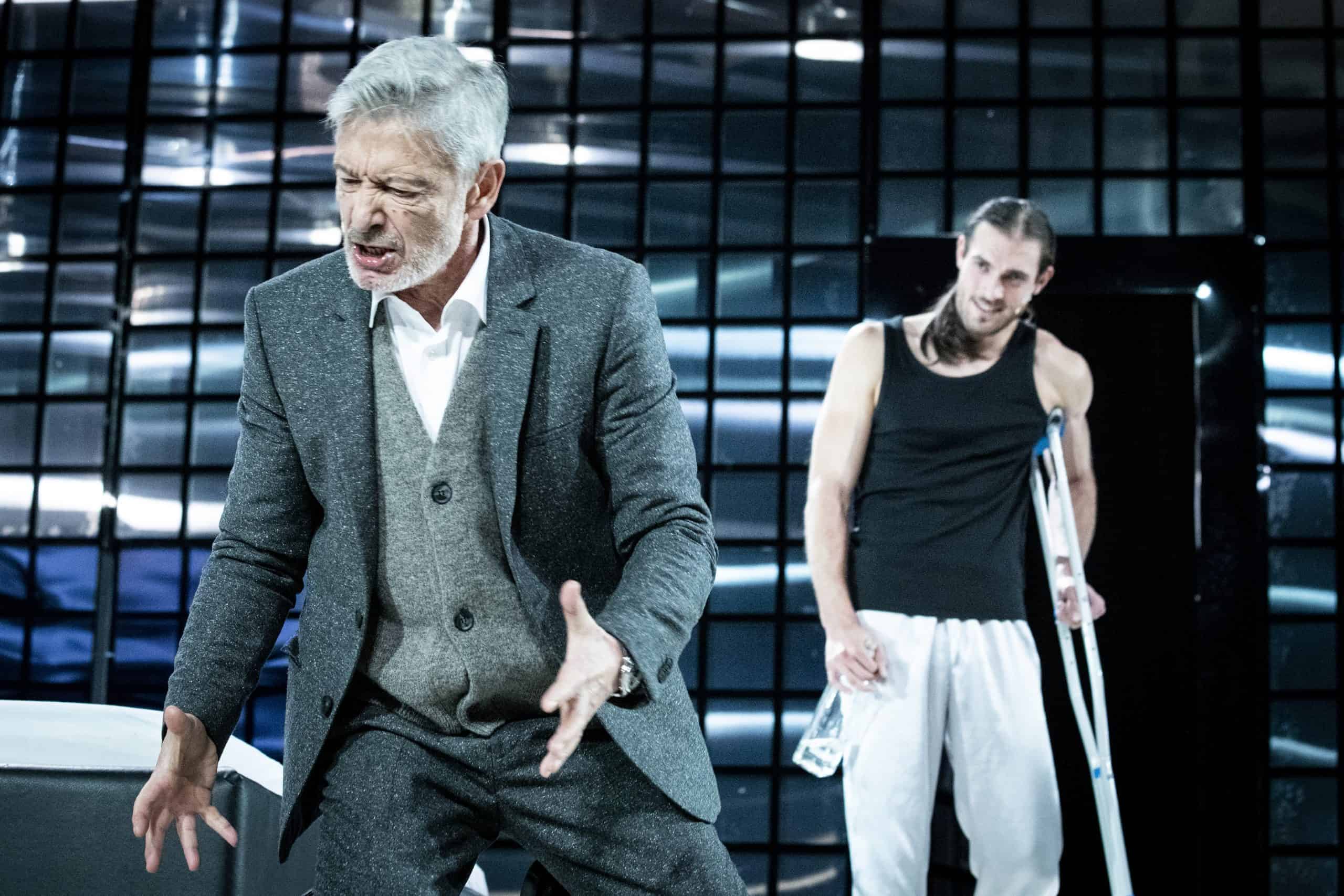
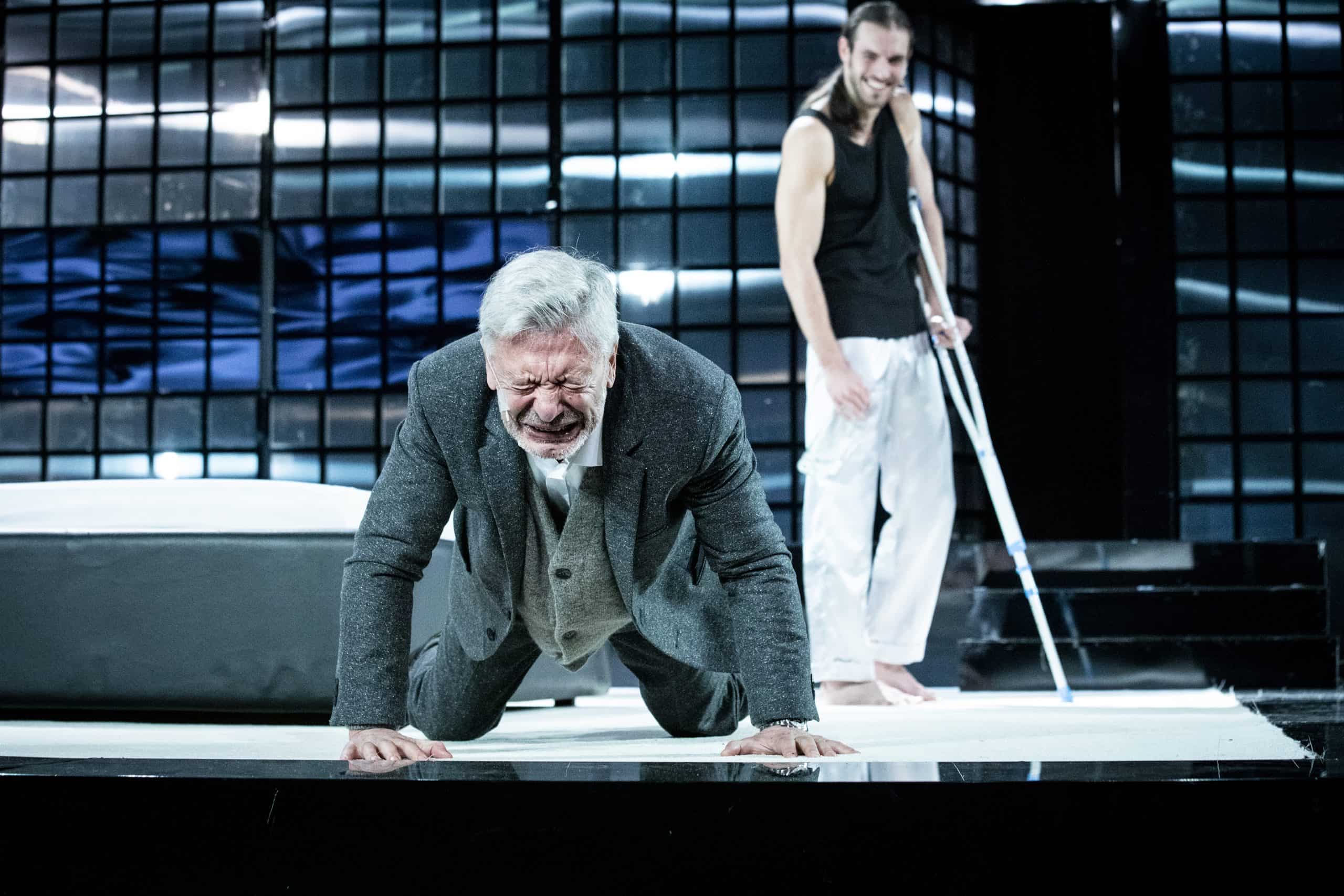
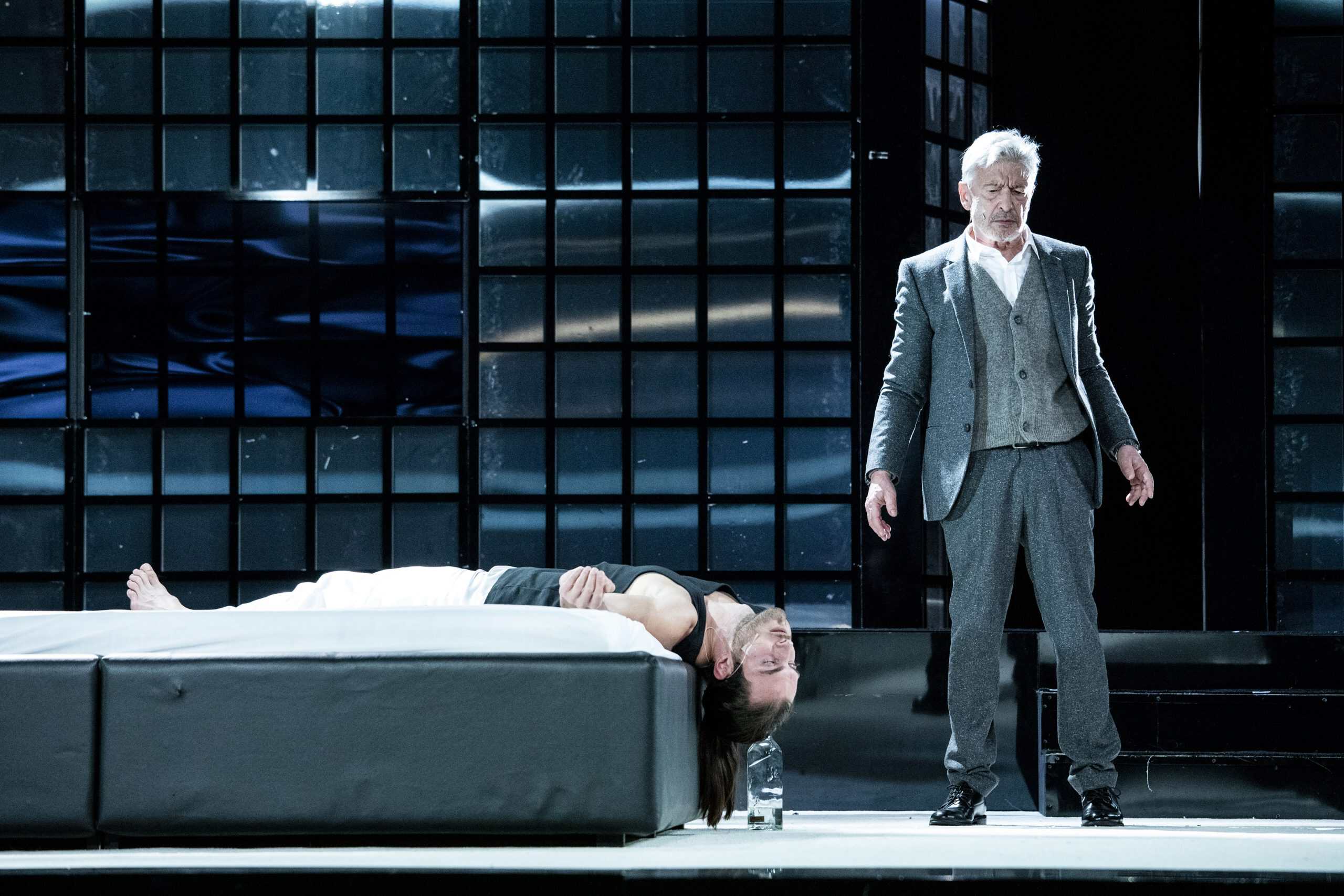
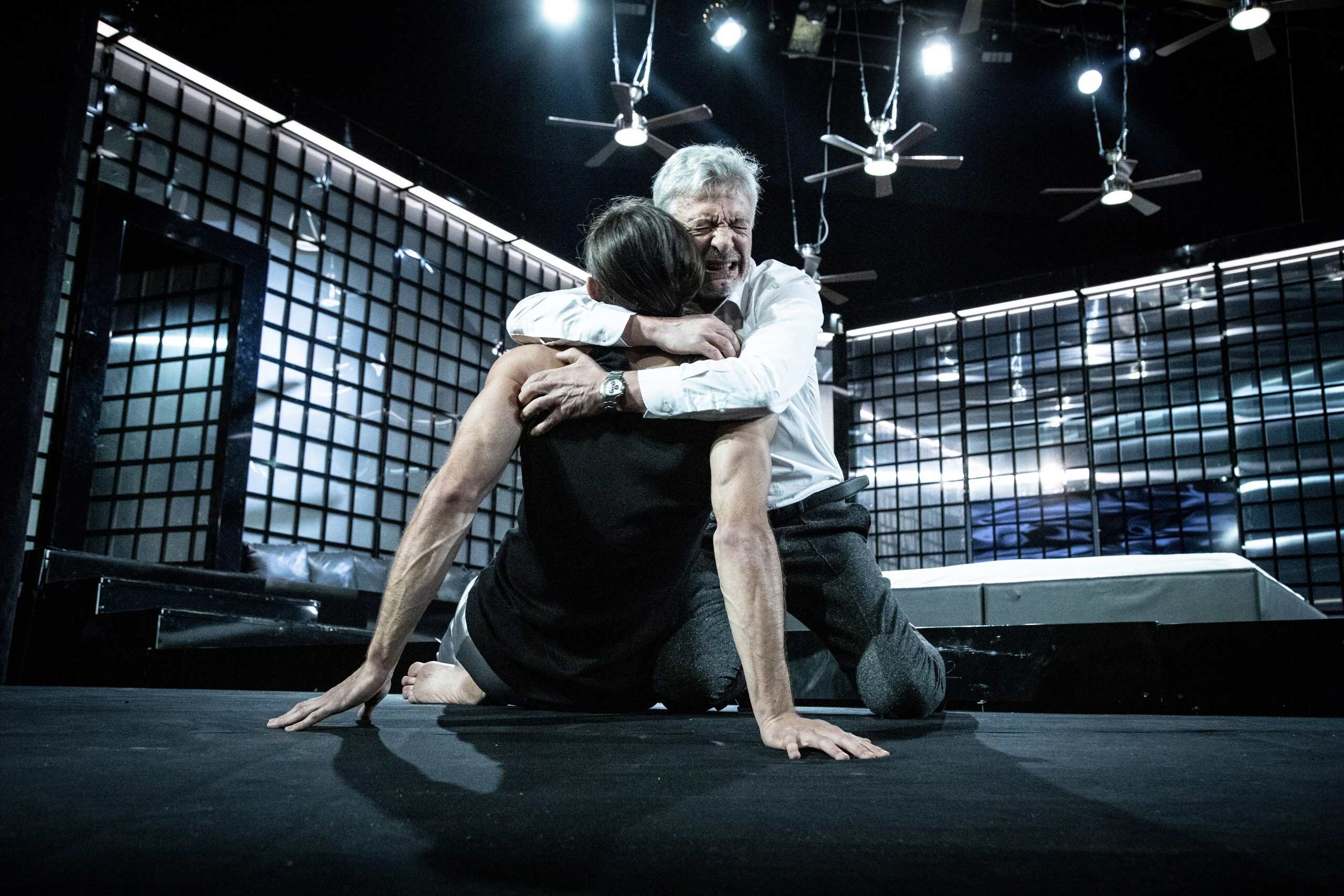
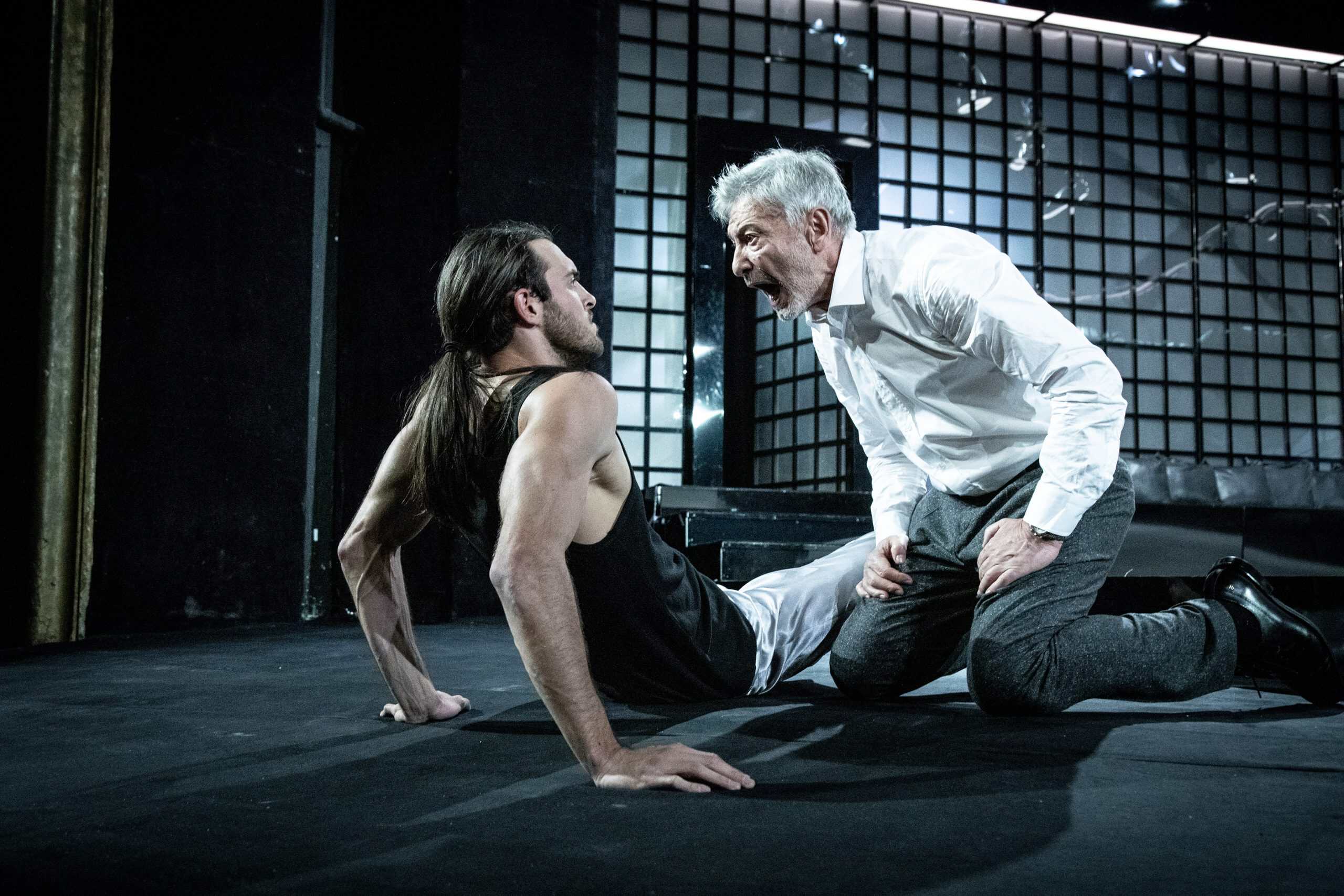
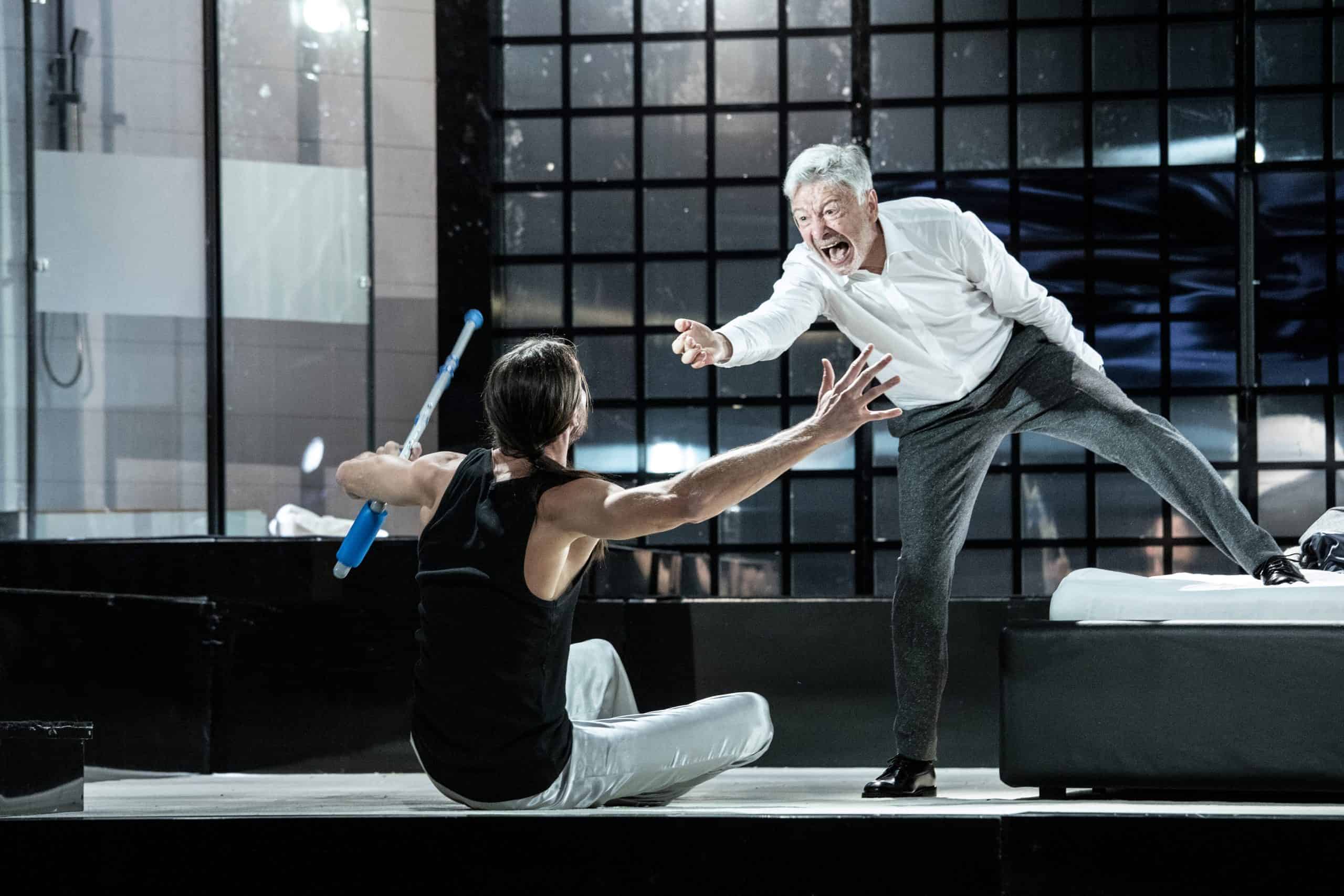
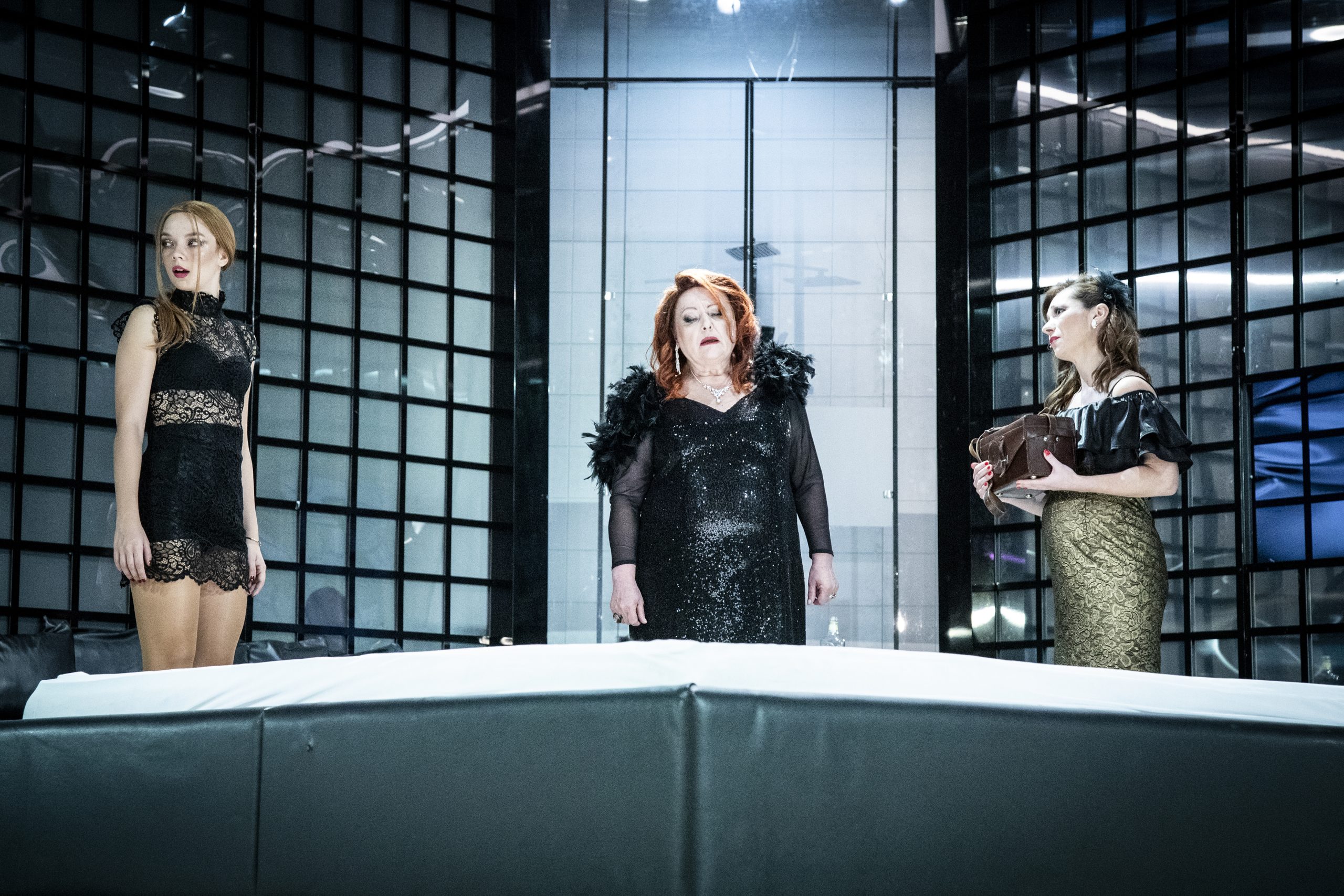
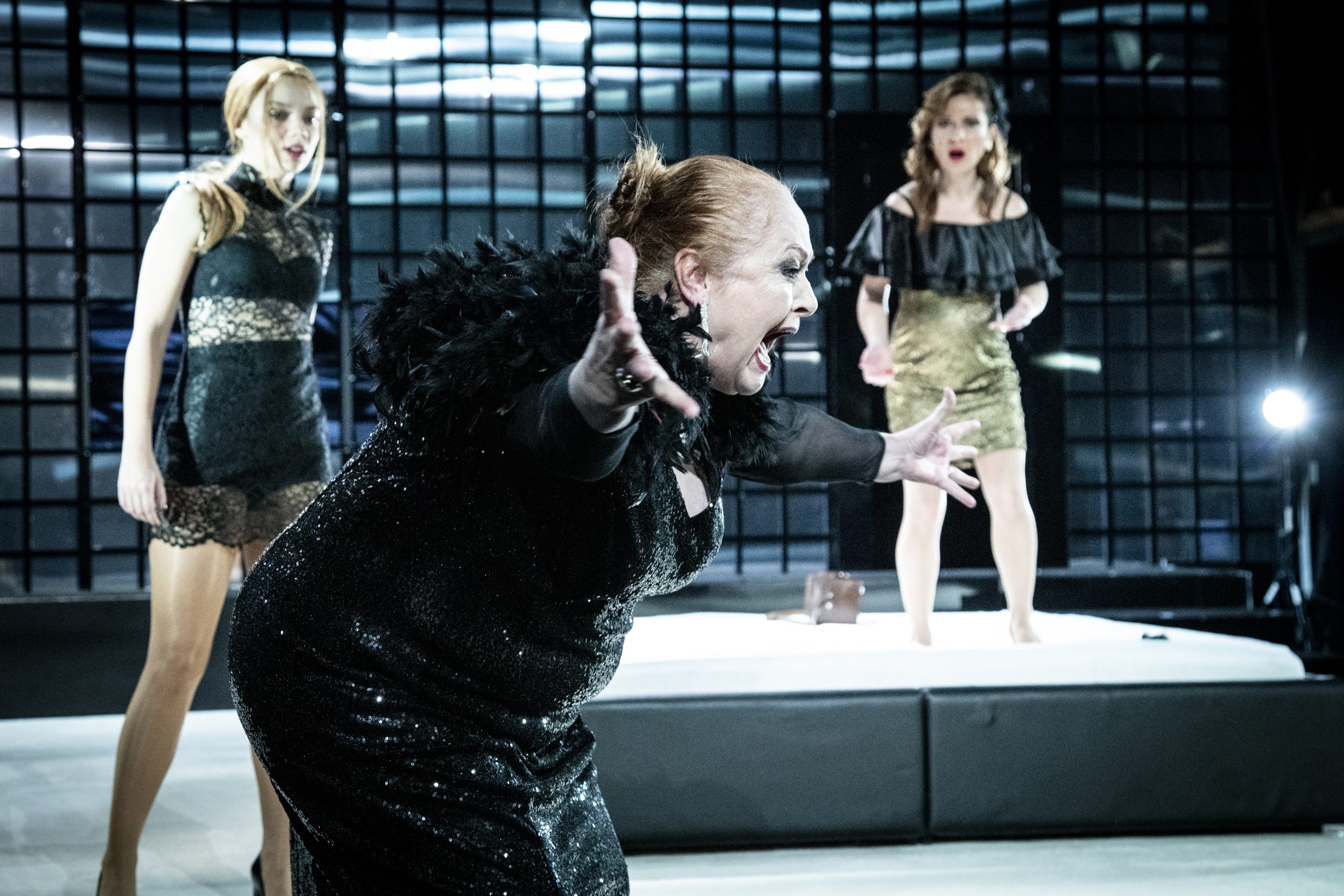
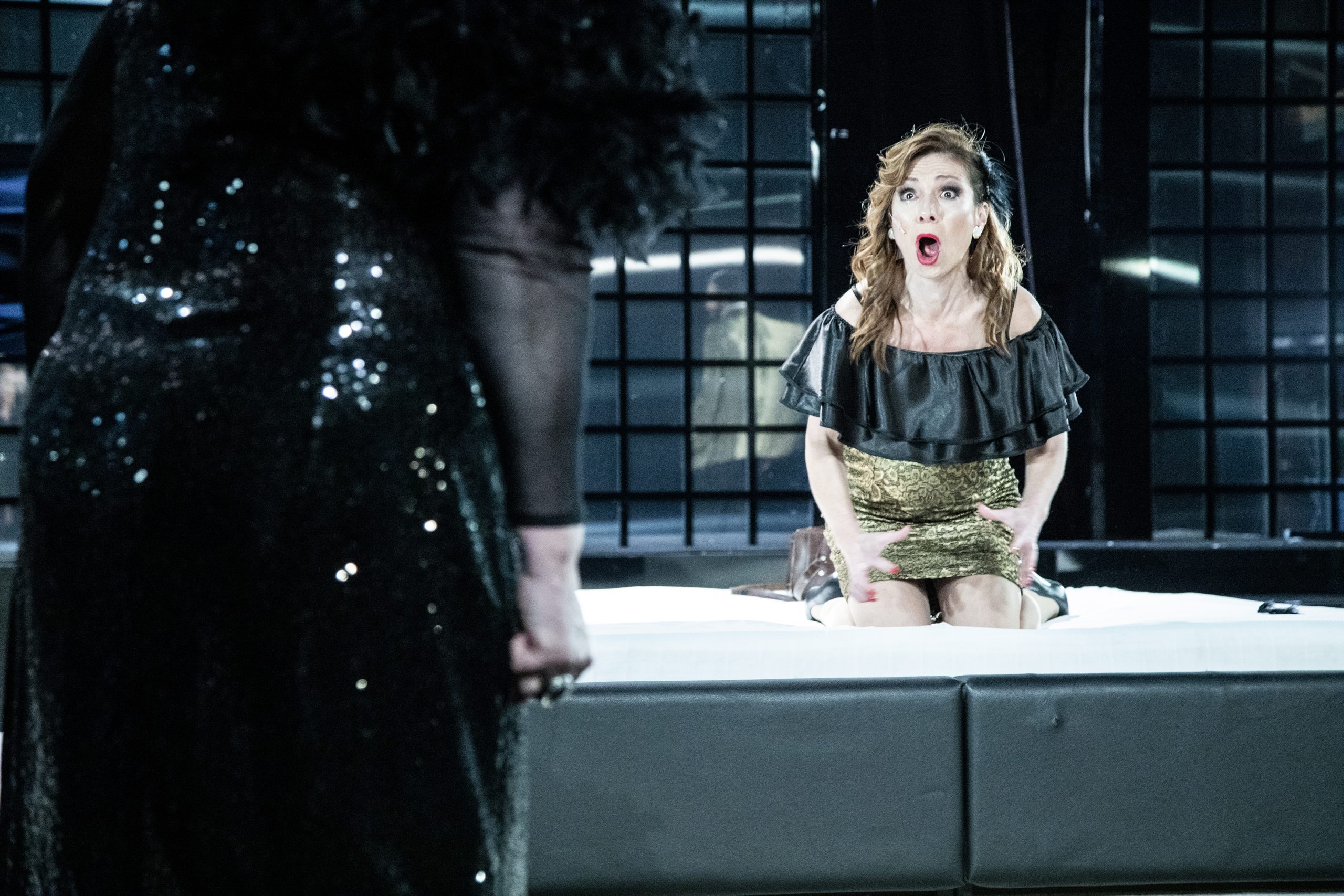
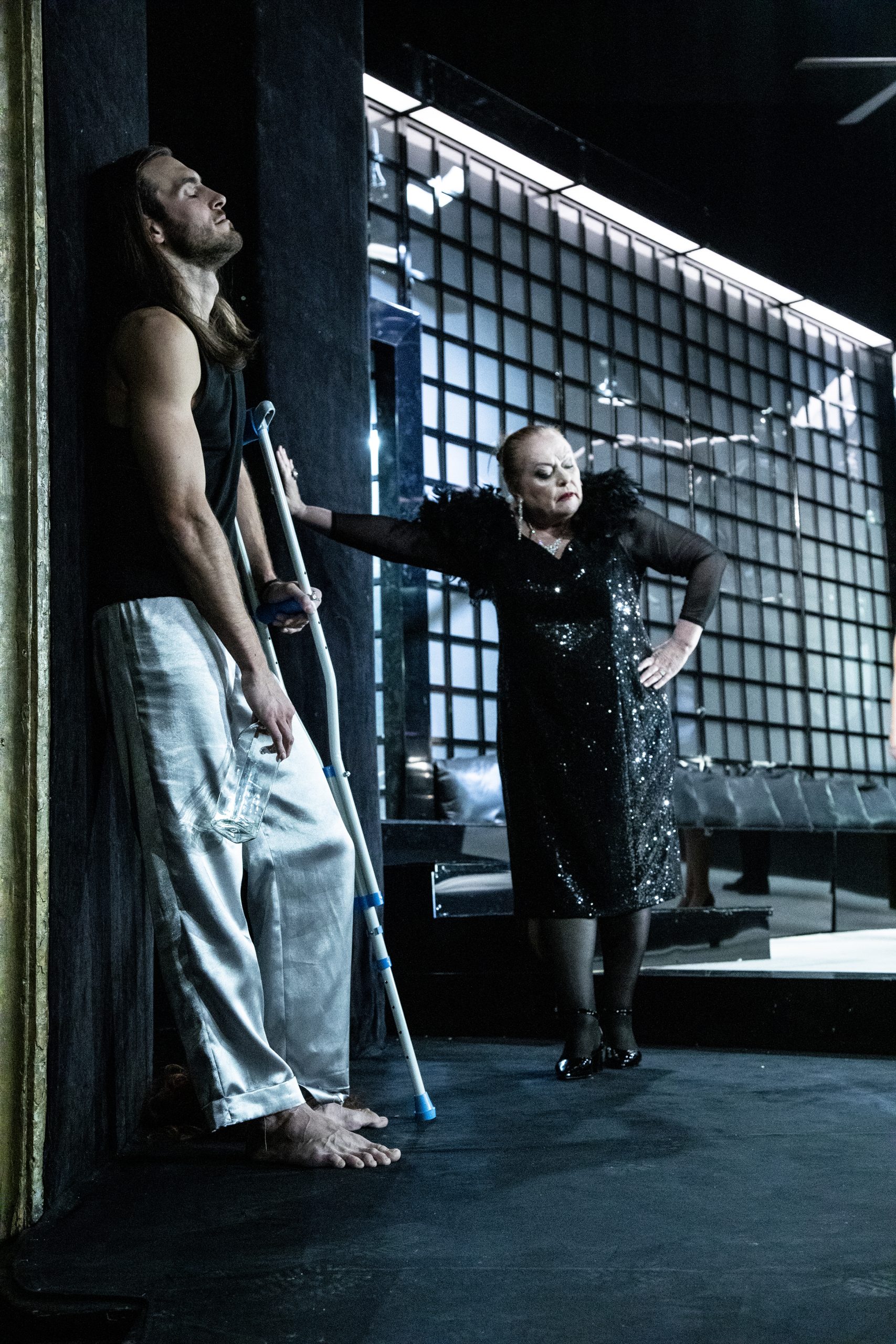
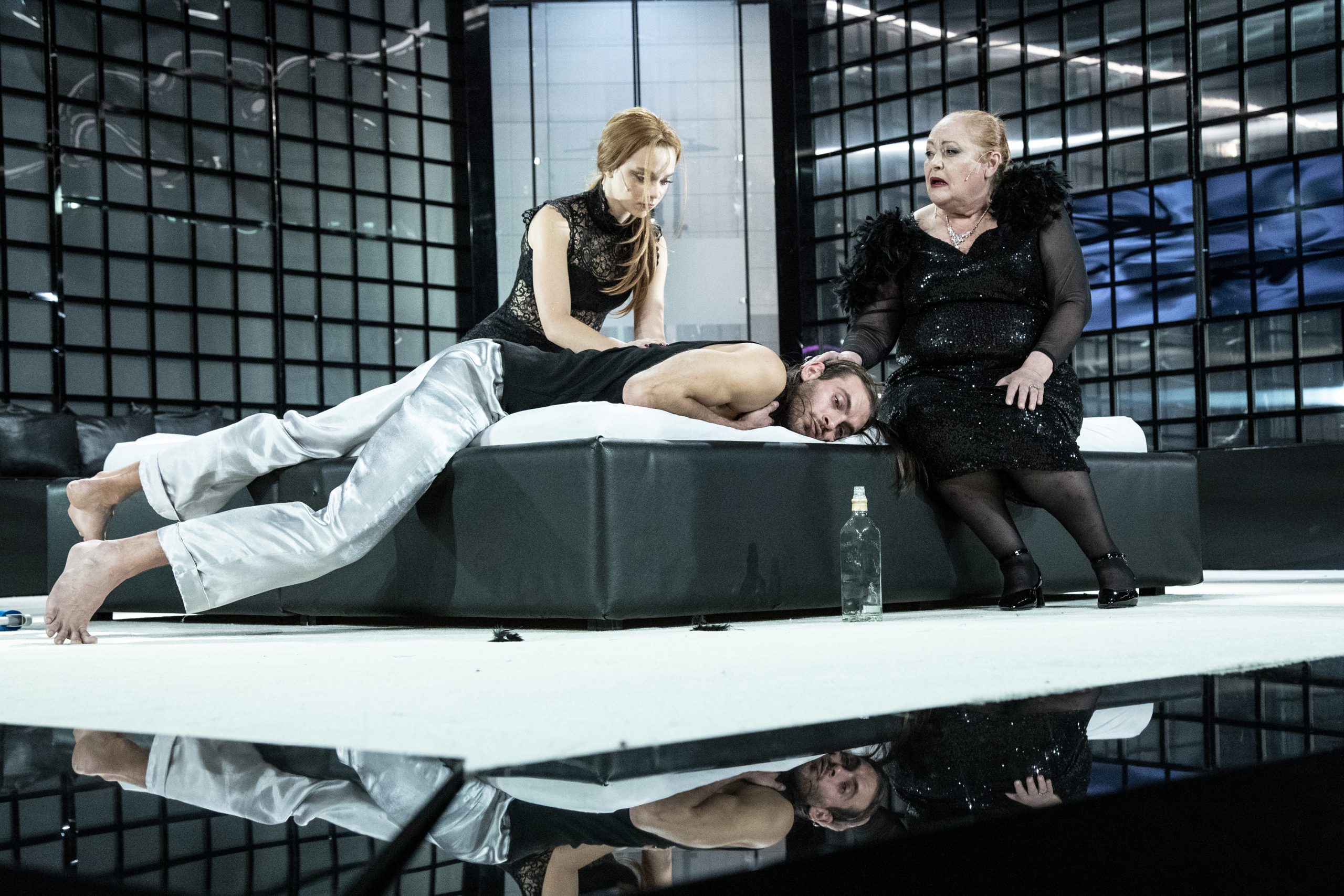
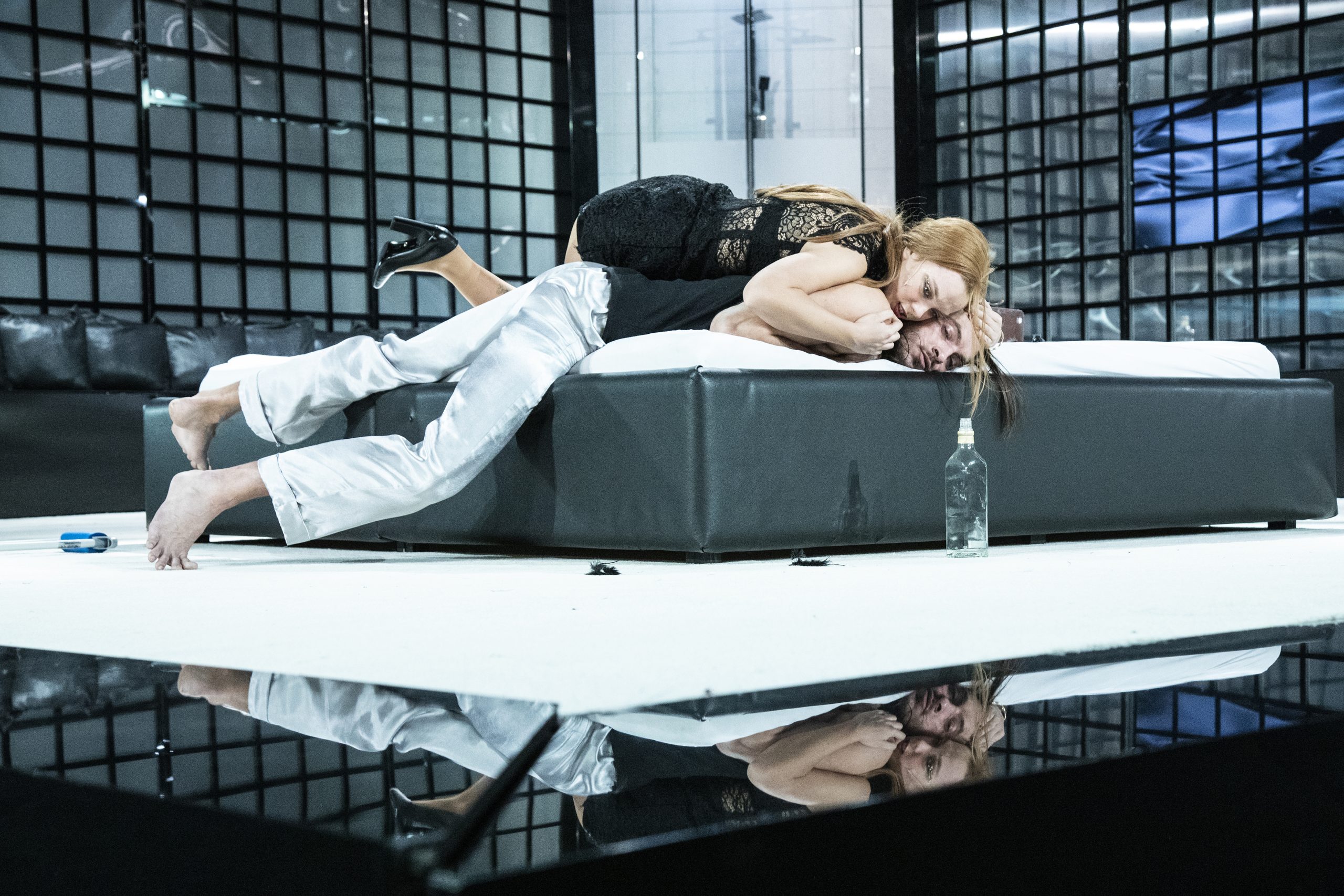
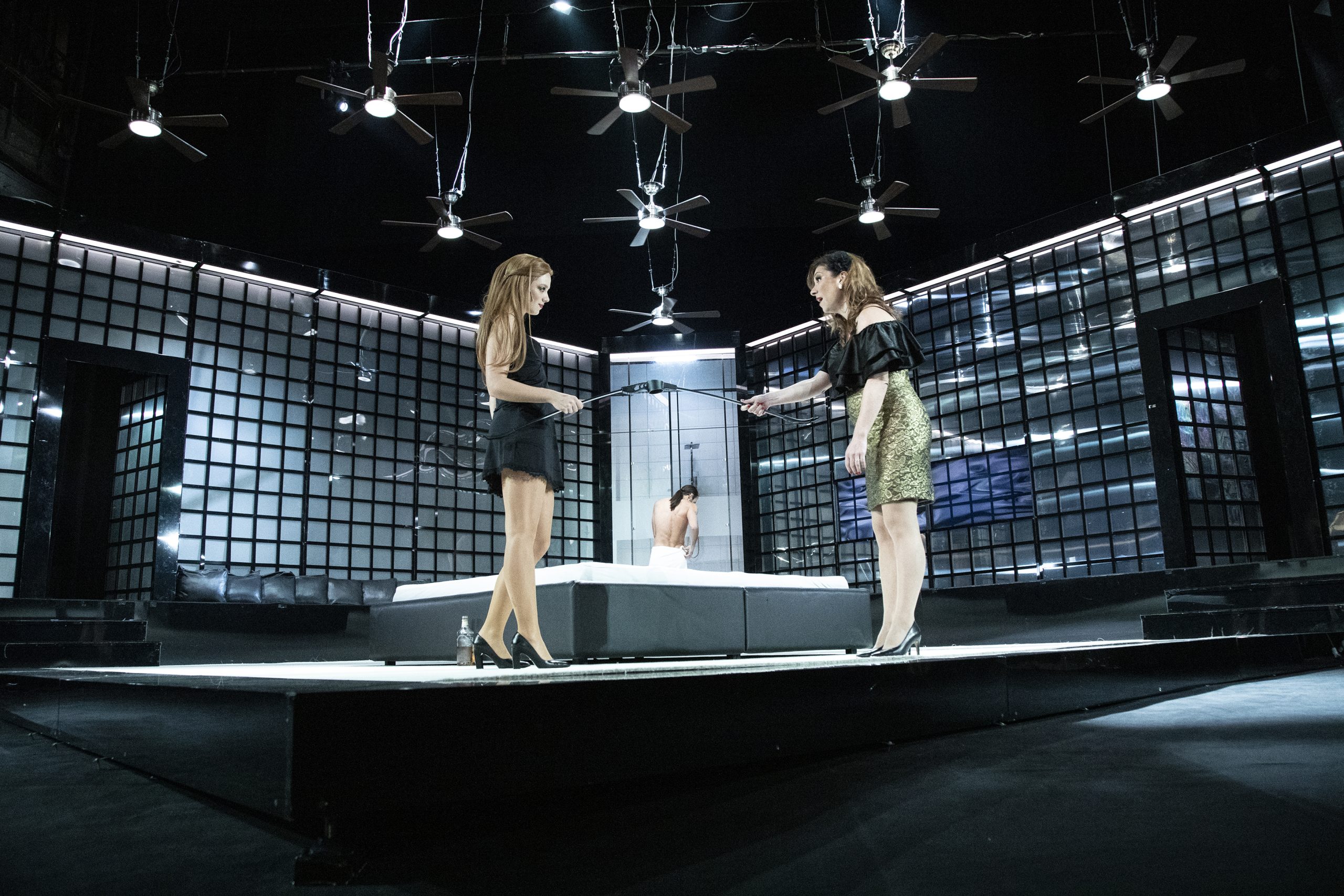
by Tennessee Williams
Director: Stayko Murdjev
Translator: Ivanka Dimitrova
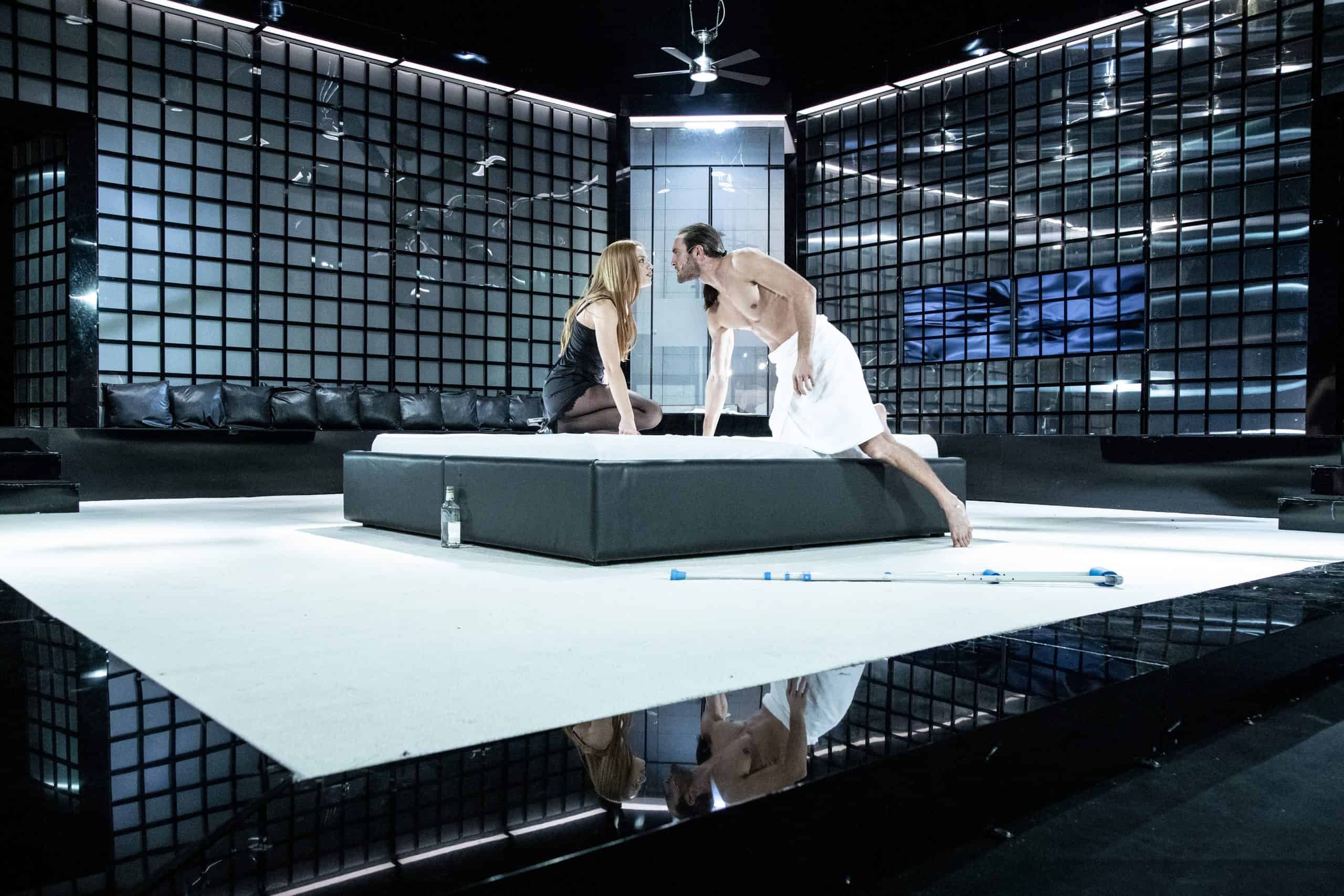
Set Designer: Nikola Nalbantov
Composer: Petar Dundakov
Video: Dimitar Sardzhev
Poster: Radoslava Boor
Photographer: Ivan Donchev
Cast:
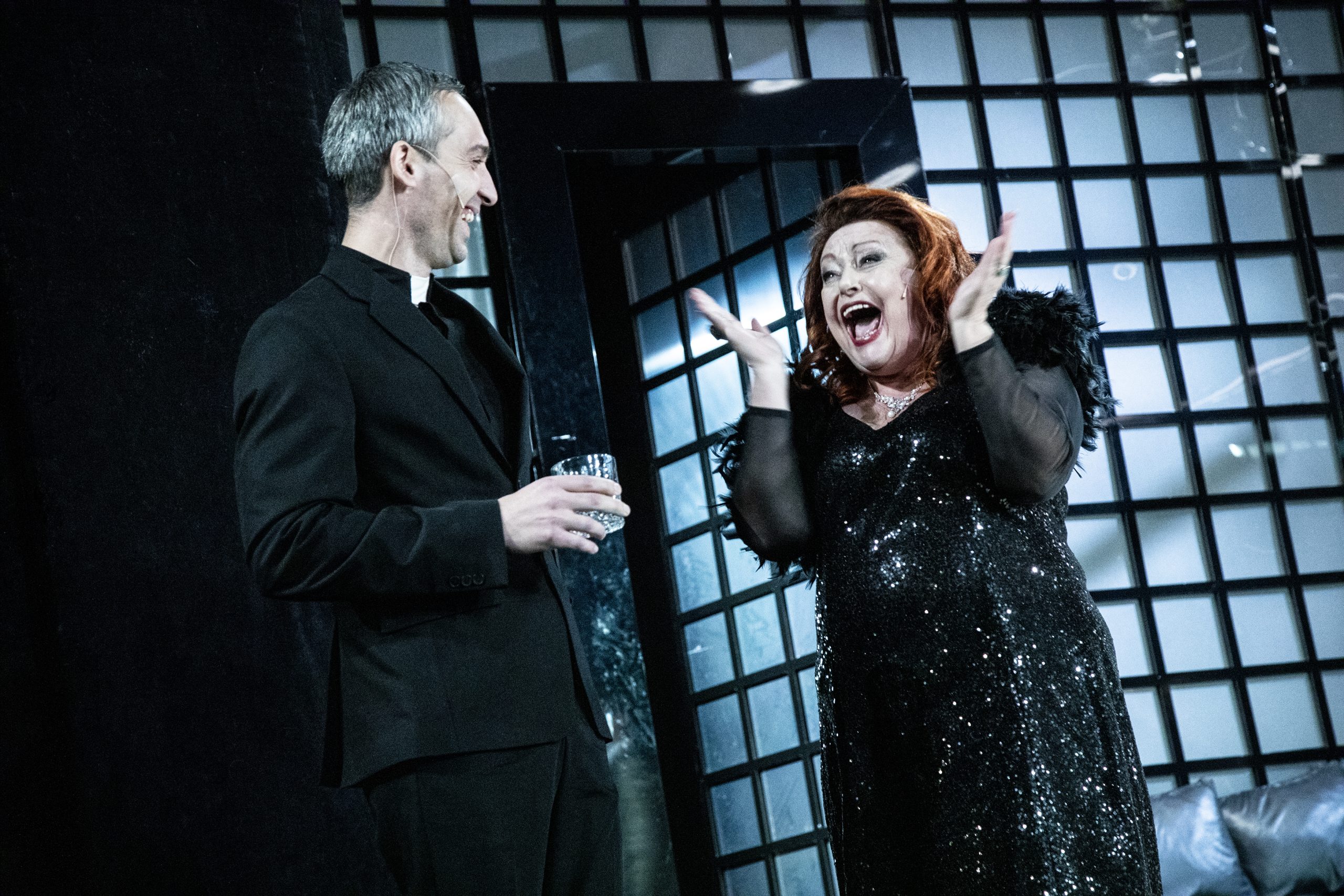
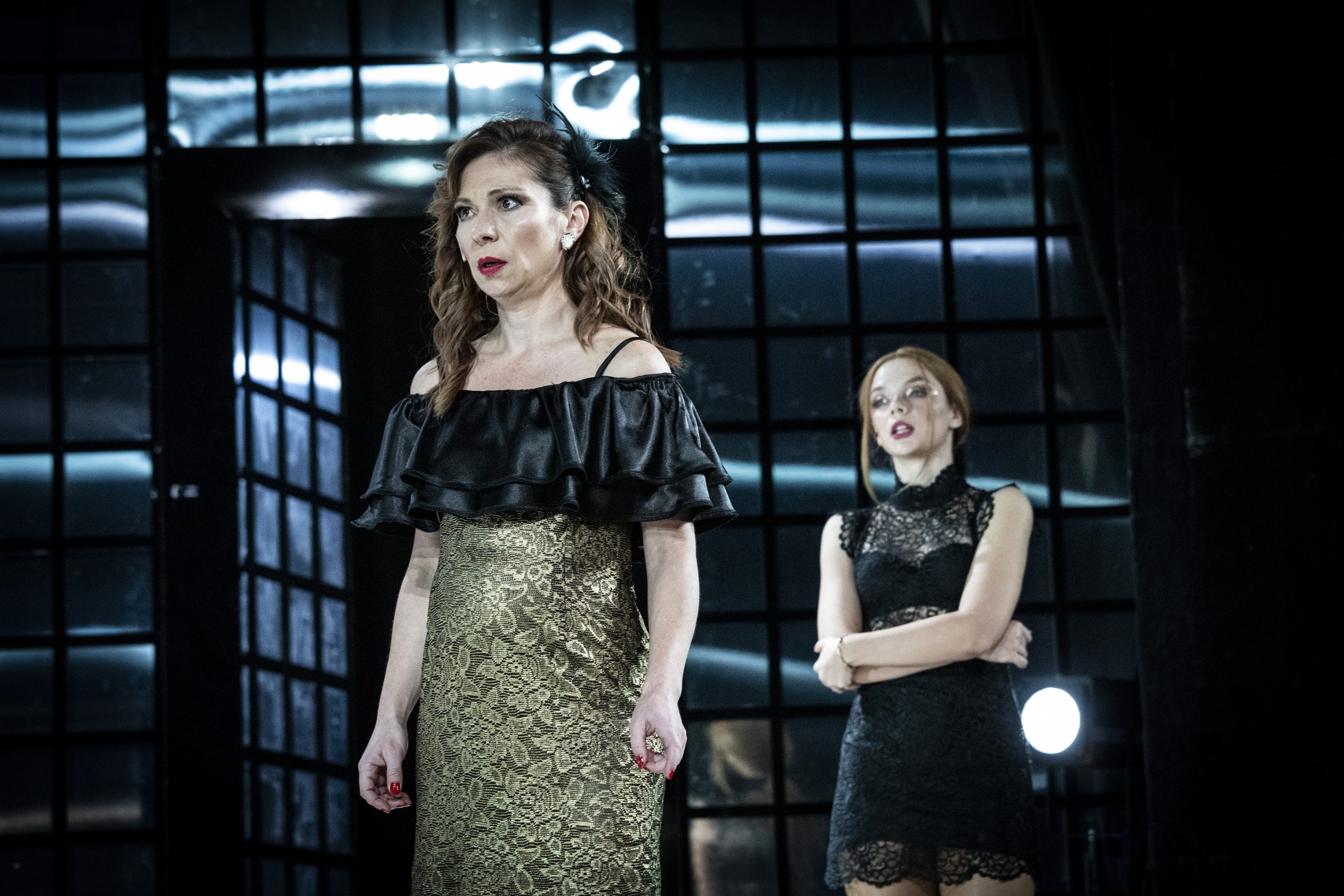
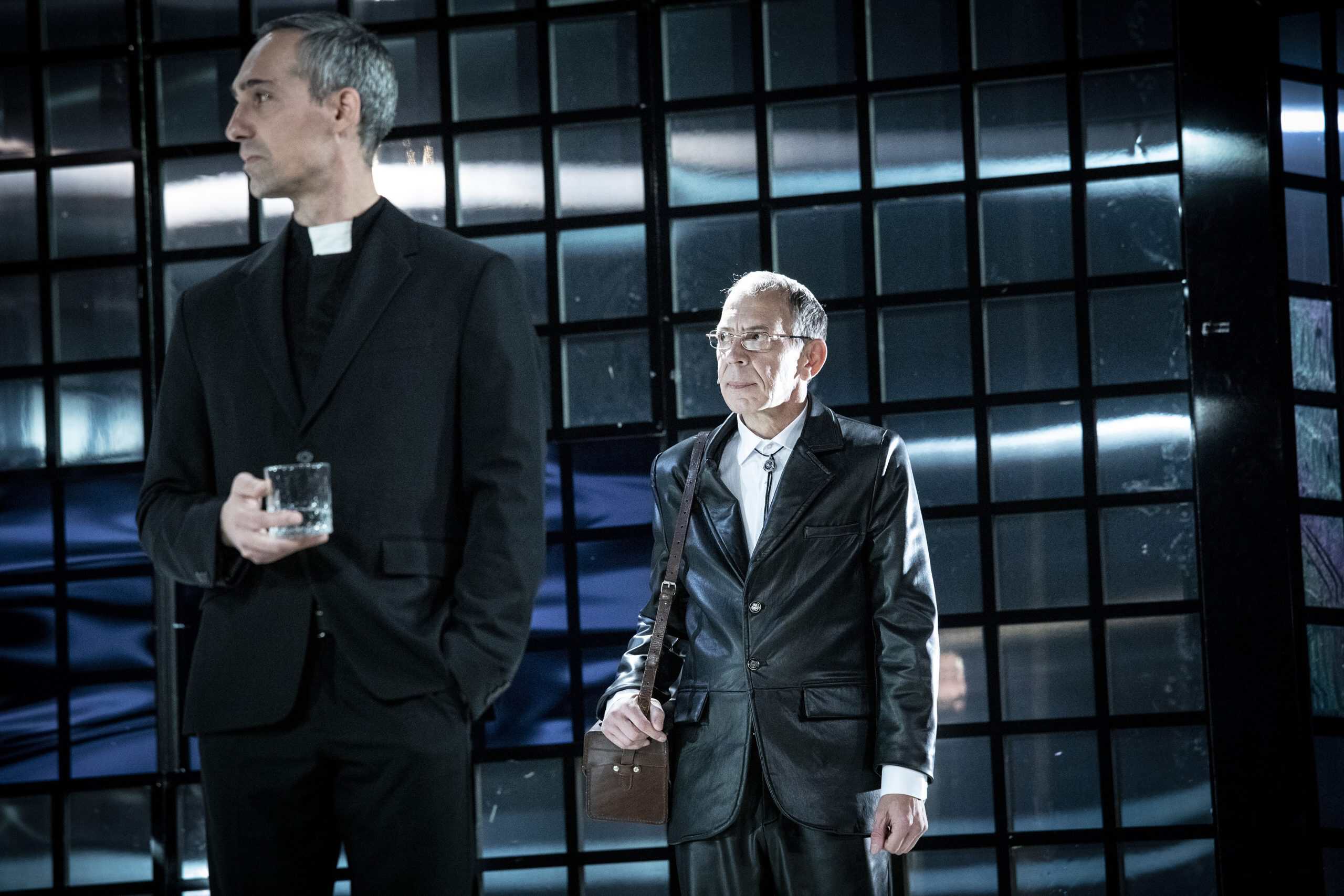
Eleonora Ivanova, Gringo – Bogdan Grigorov, Iriney Konstantinov, Petya Silyanova, Nevena Kaludova, Vladimir Solakov, Yulian Rachkov, Mihail Milchev
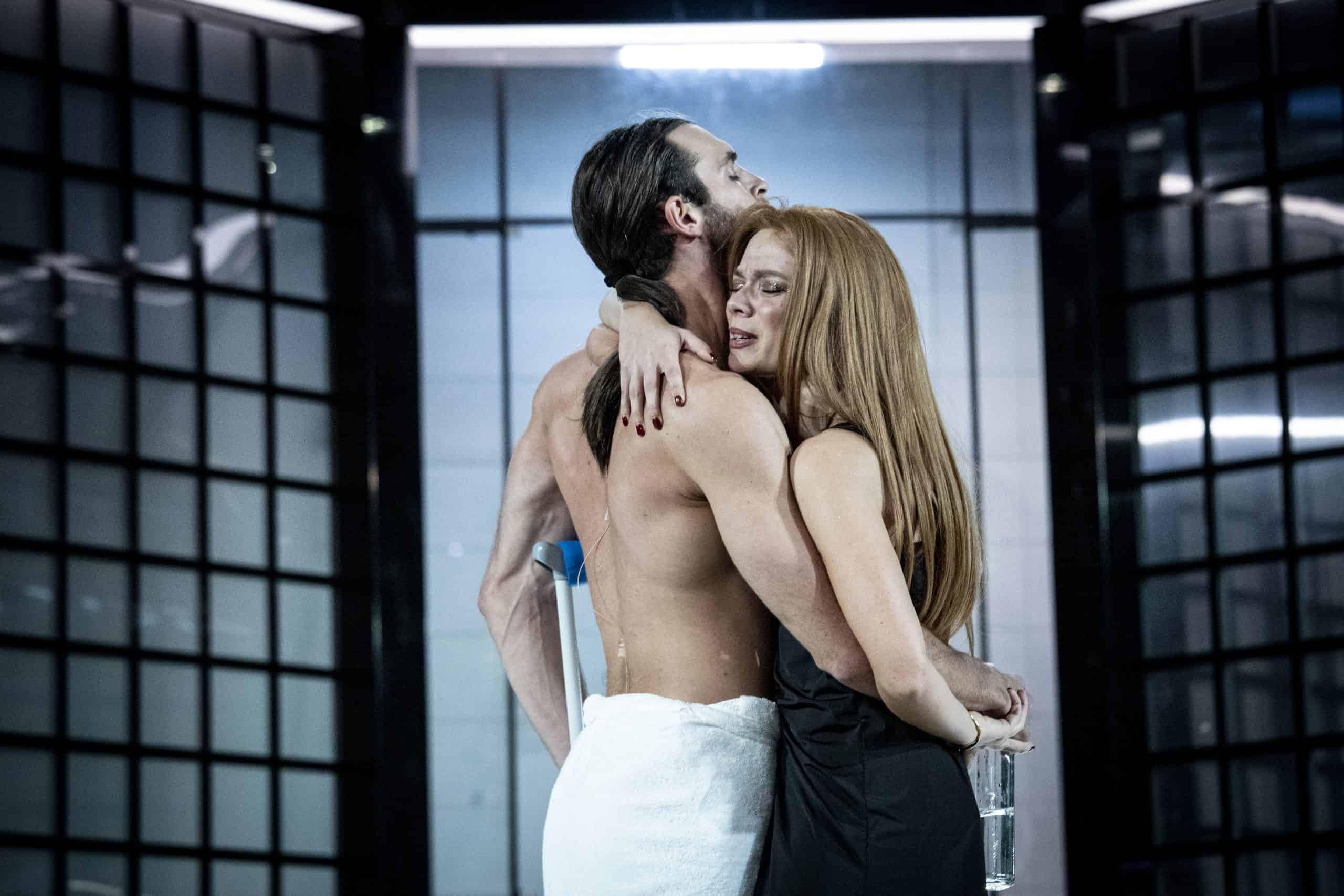
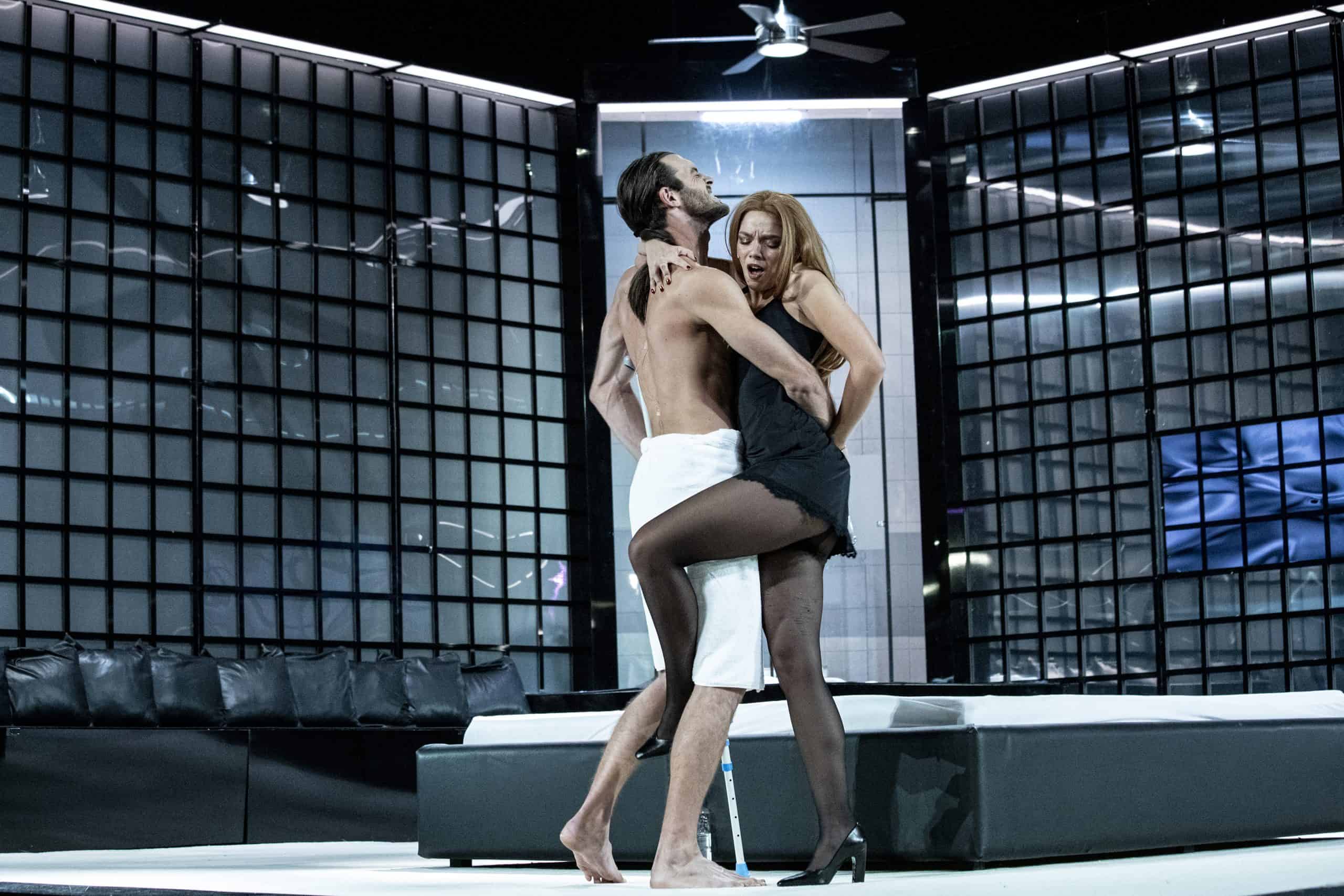
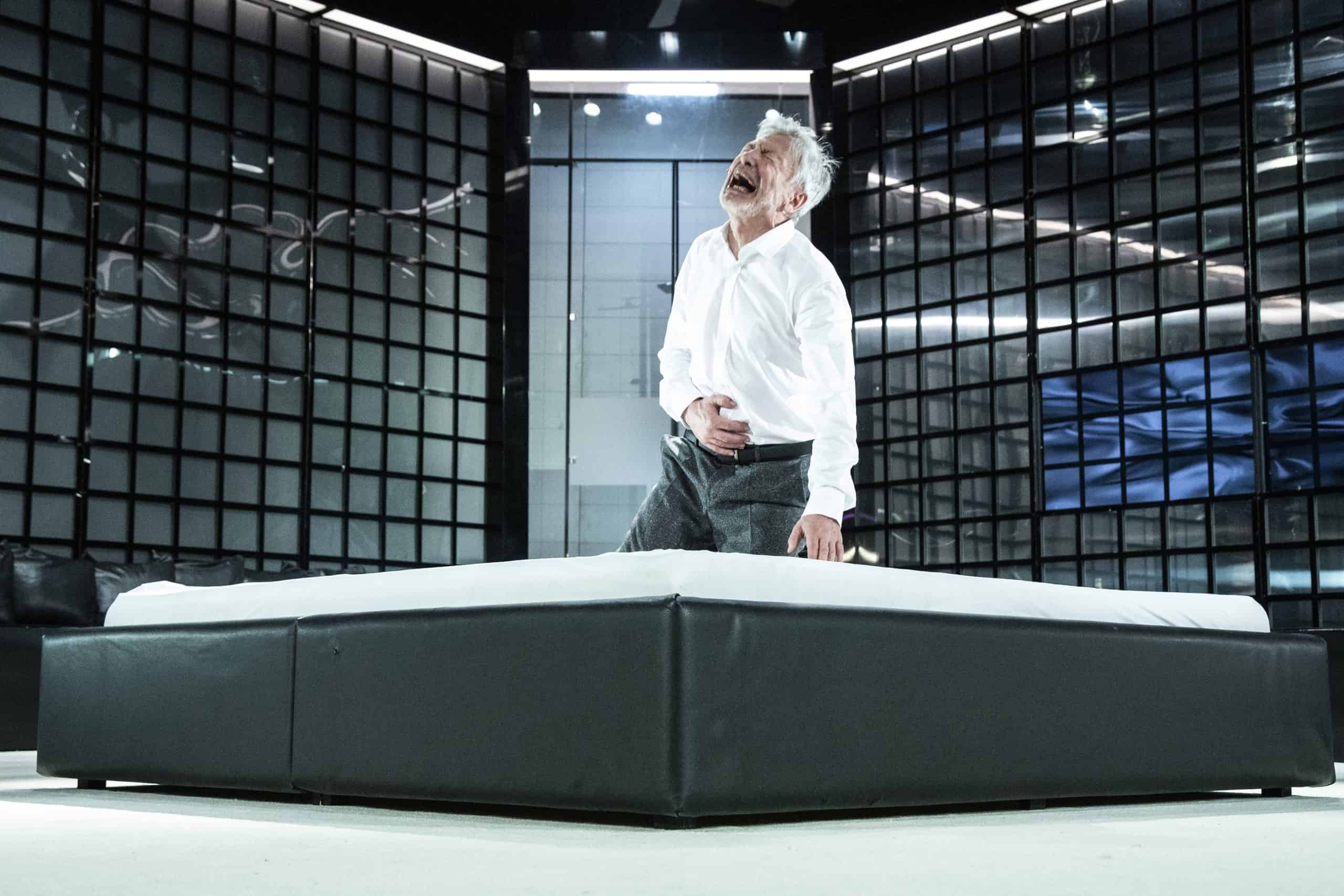
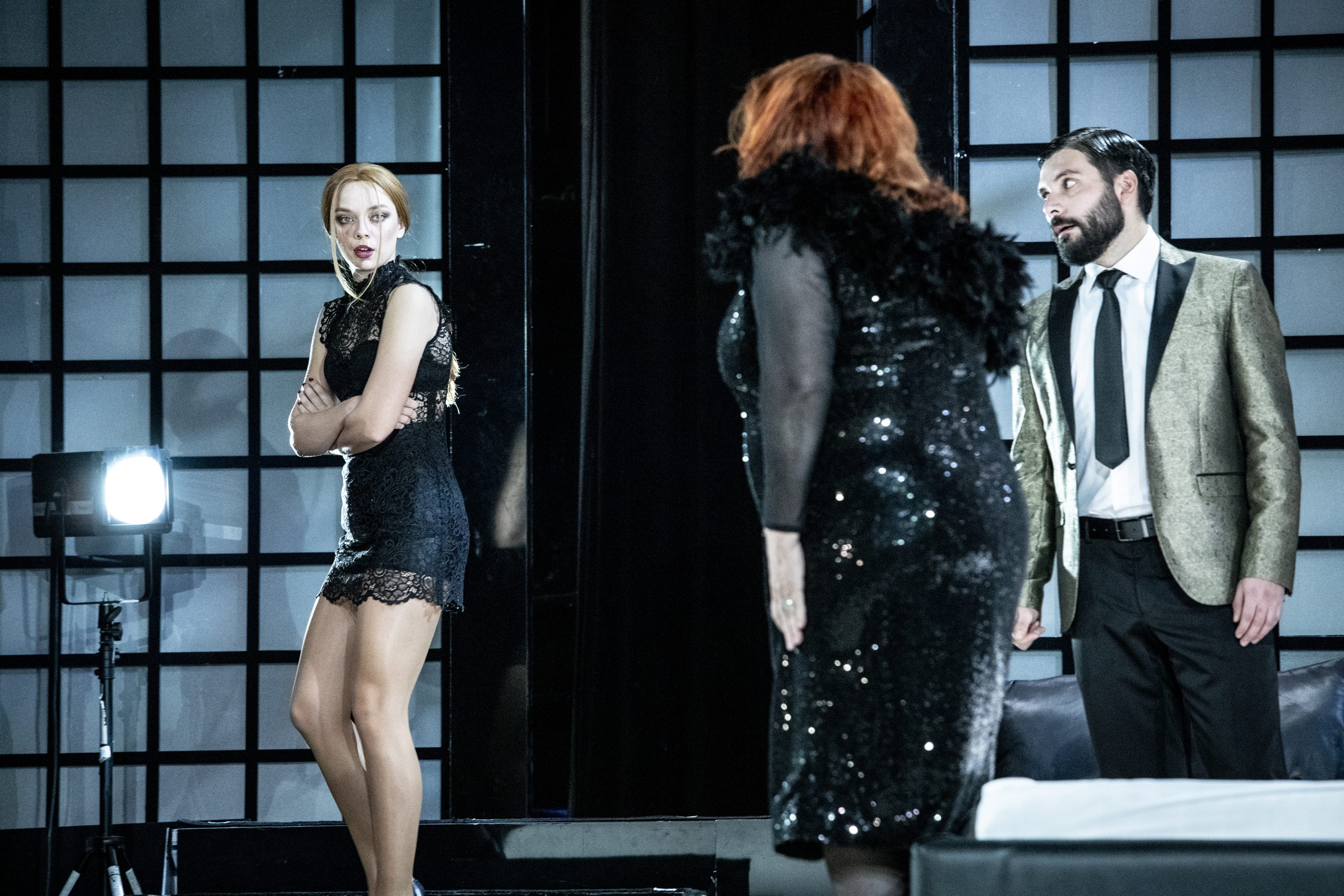
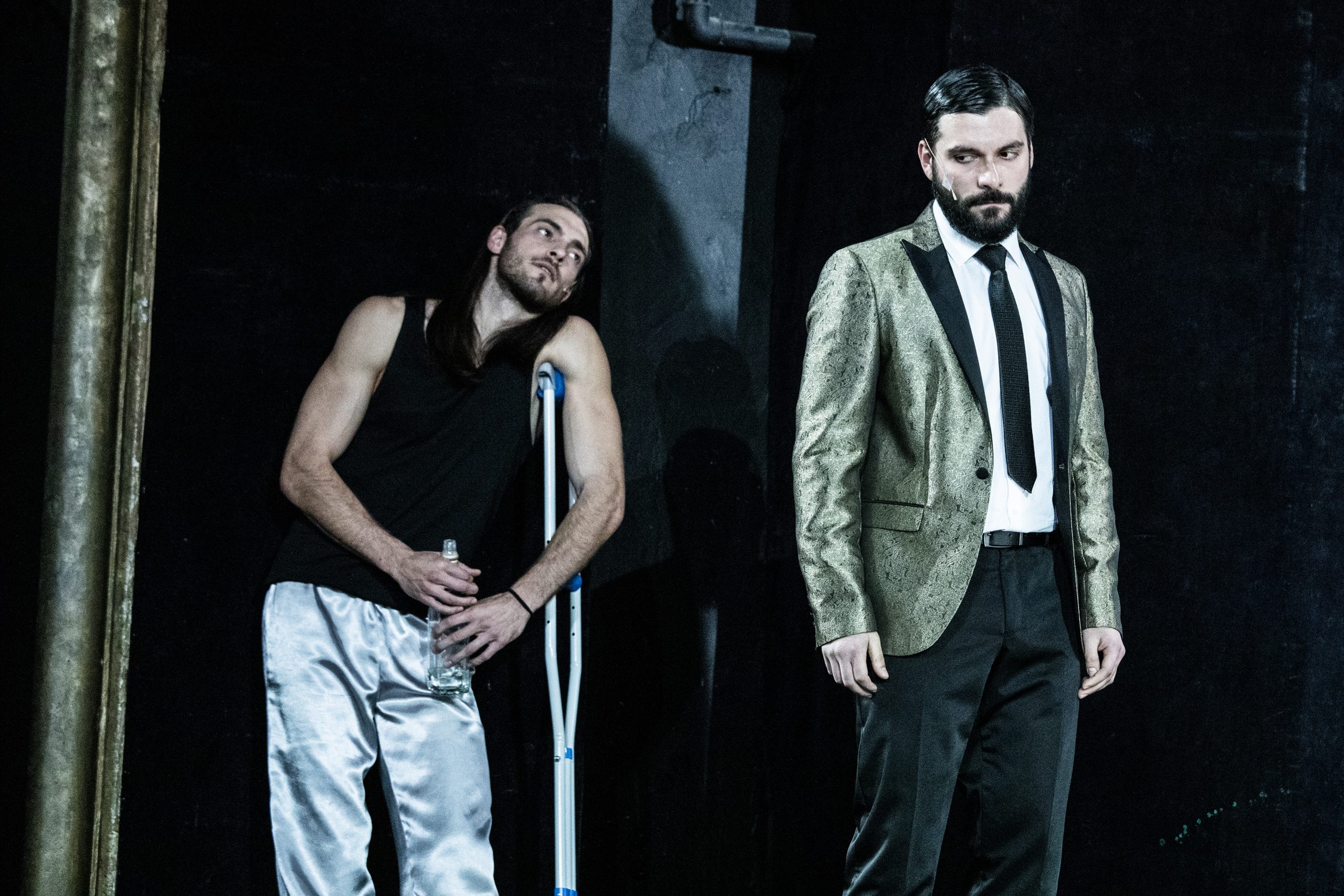
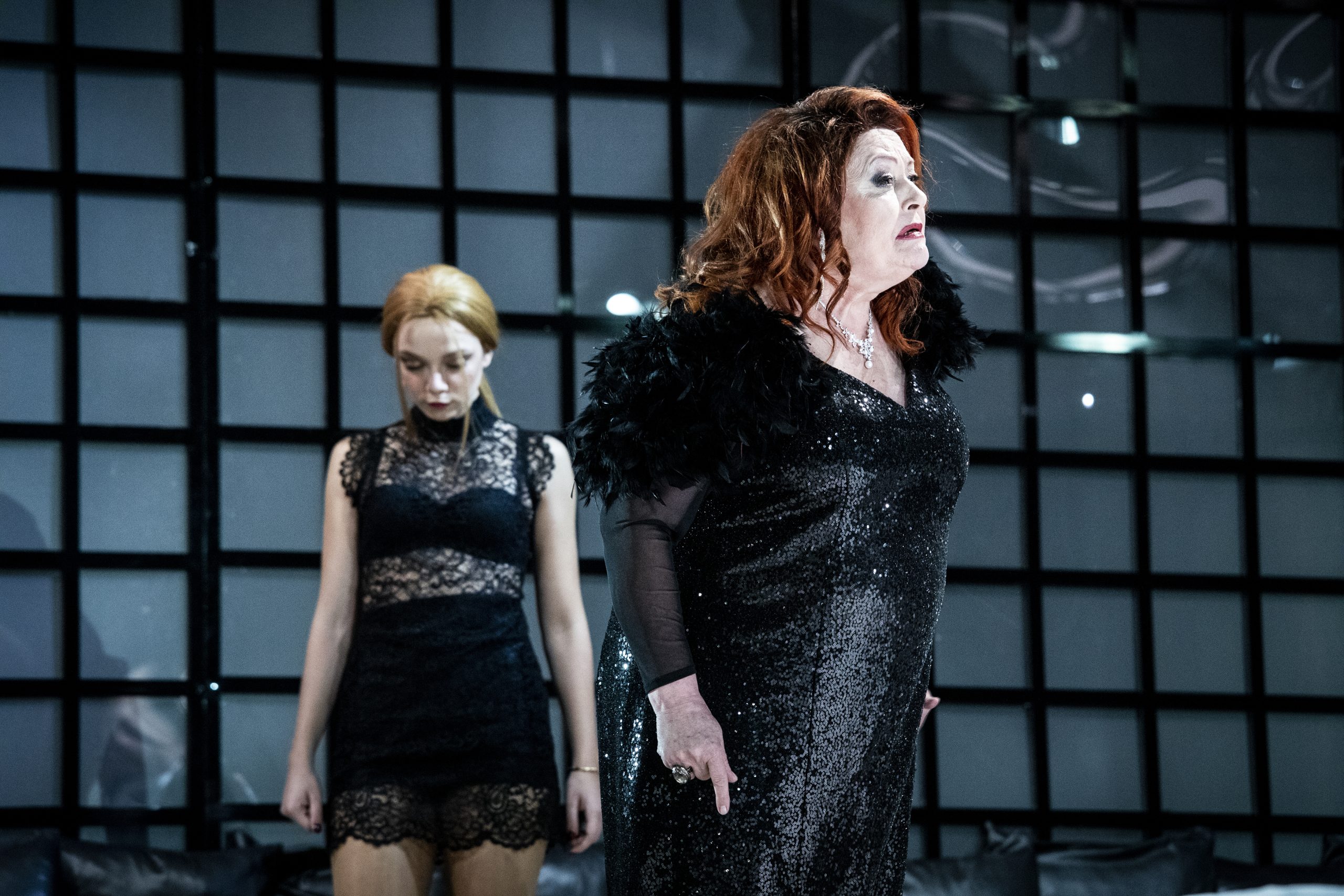
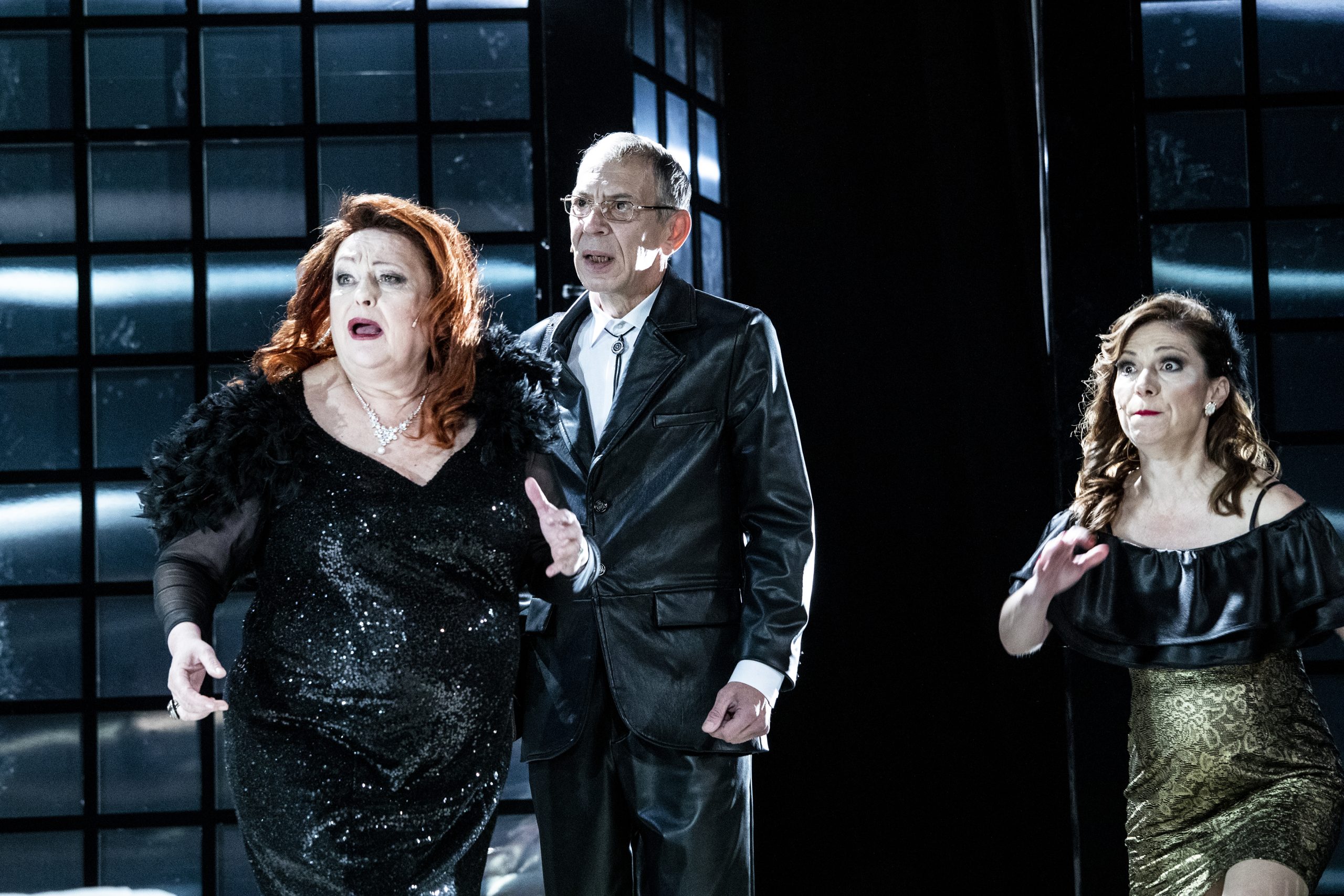
“The image of the cat on a hot tin roof symbolizes the female instinct for dominance. Sometimes, we find ourselves in a struggle for supremacy not with anyone else, but with life itself. At times, the circumstances we are placed in are force majeure situations, in which we are forced to switch to survival mode. This is the moment when neither reason nor emotion can save us—only our instinctive nature. But not the instinct to attack or flee, rather that aspect of stoicism—when, despite the searing surface beneath our bare feet, we must grit our teeth and endure, to stay on the roof for as long as possible.
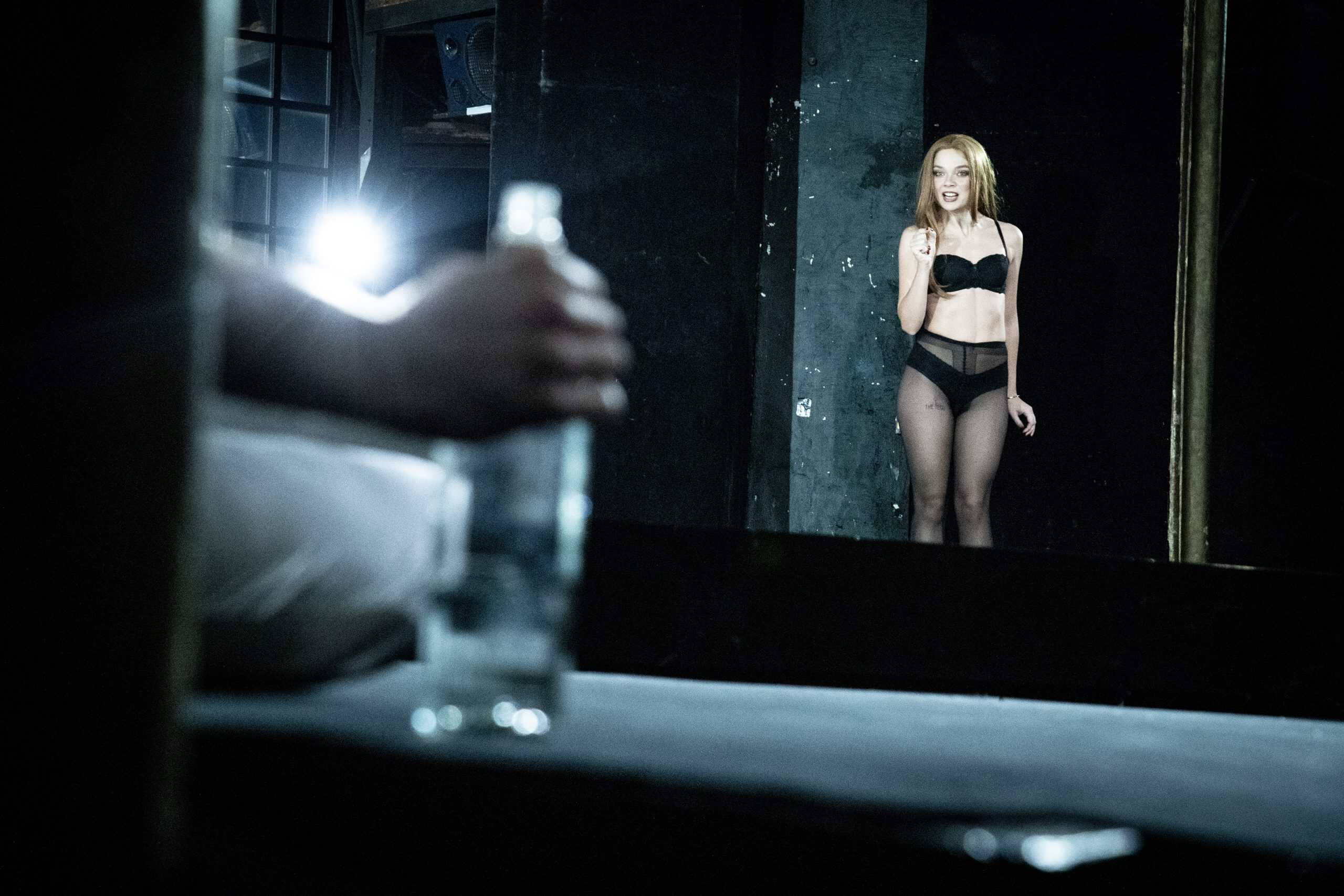
The play “Cat on a Hot Tin Roof” is structured in three parts—a monologue, a two-character scene, and a scorching final polyphonic climax. In all three parts, the characters are trying to survive despite the truth—the truth about themselves and the lives they lead, brought to the extreme edge of an abyss where everything they’ve achieved could come crashing down with terrifying force. A few frenzied cats desperately trying not to leap from the roof.
Tennessee Williams himself was a man with a painfully sensitive perception of the world—his androgynous and fragile nature made him maladapted to reality. The characters he created always carry pieces of himself—marginalized dreamers, sensitive men, and warrior-women who survive, fight, and eventually collapse under the weight of reality.
As with every good piece of drama, in this play by Tennessee Williams the dramaturgical fabric is woven with a polyphony of themes—it may seem on the surface that the themes are clear, but when you dig deeper, they lead to a different layer of hidden emotional wounds. And even deeper lie buried chunks of raw flesh—painful and bleeding—and only by bringing them to light can these wounds be healed. The theme of enduring the storm of life—not just surviving, but enduring—is a central theme in this brilliant text by Williams, as is the theme of illusions, through which we cross the river of life more easily to reach the other shore, where the “land of the dead” awaits. In the first act of the play, Margaret shouts something terrifying behind Brick’s back, a sinister slogan that echoes like a curse: “Life has got to go on, even after all illusions about it have been lost.” This seems to be the key to the characters and their struggle—is it possible to live while looking truth directly in the eye, and if so, isn’t that a life doomed to sorrow and relentless pain? La Rochefoucauld says that the sun and death cannot be looked at directly. It is this very impossibility—of facing both the light of truth in life and the darkness of the unknown in death—that drives Tennessee Williams’s characters to fight for survival like wild animals.
I believe this text not only fits within the context of Bulgarian reality but serves as a firm response to many questions posed by the environment we live in. In our reality, intolerance toward difference, rejection of sensitivity, and the idolization of materialism are not just accepted as normal—they’ve become an inseparable part of our existence. And that’s a problem. Our thick skins, lack of warmth, and constant calculation of material gain have become our second nature. And texts like “Cat on a Hot Tin Roof” are gestures of defiance against the erasure of the human soul.”
Stayko Murdzhev, Director
With Nencho Kostov in the video narration.